
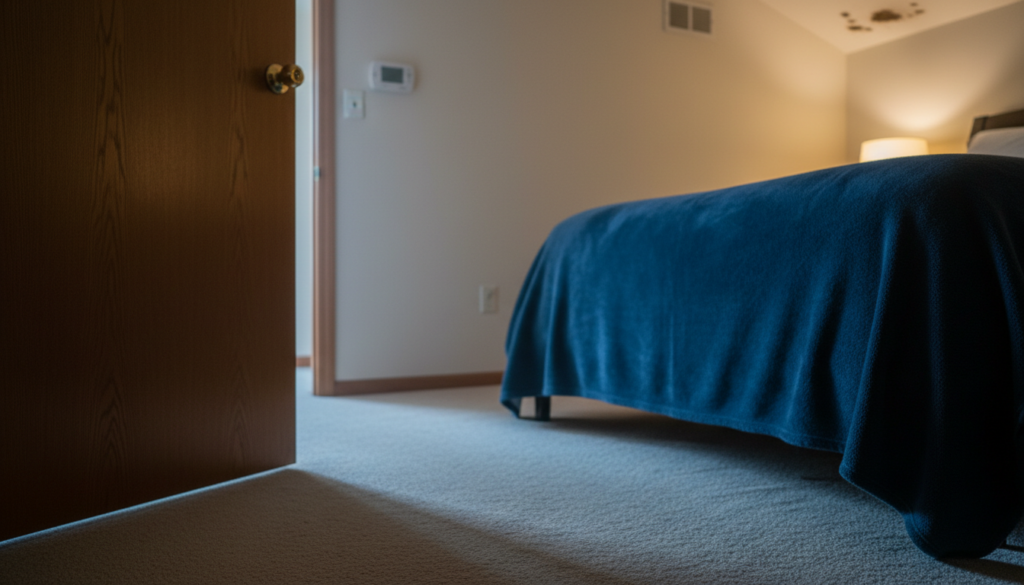
Most homeowners shut the bedroom door at night without a second thought, and the connection between closing bedroom doors and HVAC airflow never crosses their mind until one room turns into a damp cave. Short version: your central system needs a clear path for air to get back to the equipment, and a closed door cuts that path off. The room pressurizes, the return starves, the blower strains, and the thermostat out in the hallway has no idea any of it is happening.
And in a climate like ours, with Georgia humidity sitting on the house most of the year, the side effects show up faster than they would somewhere dry. This guide walks through what actually happens behind a shut door, what it does to your equipment, and what to do if you want the door closed anyway.
Closing Bedroom Doors and HVAC Airflow Basics
A central HVAC system is essentially a closed loop that pushes conditioned air into every room and has to pull the same amount back through the returns. Most homes around Milledgeville and Covington have one or two central returns, usually in a hallway, and that design assumes air can travel freely from every bedroom back to that grille. ACCA Manual D, the industry standard for residential duct design, sizes return pathways on the assumption that interior doors remain open, a design premise the majority of occupied homes violate daily.
Shut a door and the supply register keeps feeding the room while the return path disappears. The air has to squeeze under the door or through whatever cracks it can find, and the loop breaks.
At Air Conditioning Specialist, Inc., we have been crawling through Middle Georgia ductwork since 1967, and the single-central-return floor plan is still the most common thing we see.
Nobody designed those systems for a family that keeps four doors shut around the clock. The house works fine on the walkthrough with every door propped open, and then real life starts.
Does Closing Bedroom Doors Affect Airflow?
Closing bedroom doors raises static pressure beyond design limits in most single-return homes. A closed bedroom pressurizes because the supply keeps blowing while the return path is pinched off, and a pressurized room resists taking in new conditioned air, so the room gets less cooling at the exact moment you want it cool. Static pressure is the resistance the blower works against to move air through the duct system; every closed door adds to it.
Meanwhile the hallway thermostat is perfectly satisfied and shuts the system down early. That’s why your room gets hot when you close the door, a pattern that points to deeper comfort problems throughout the house.
Static Pressure and Return Air Dynamics
Duct systems are sized to a total resistance budget, and in a lot of older homes that budget is already spent on undersized returns, kinked flex duct, and a filter rack that was an afterthought. ASHRAE Standard 62.2, which governs residential ventilation, establishes that inter-room airflow paths must be maintained to preserve both air quality and equipment performance, closed doors with no transfer path directly undercut that standard. Close two or three bedroom doors and you push the system past what it was built to handle.
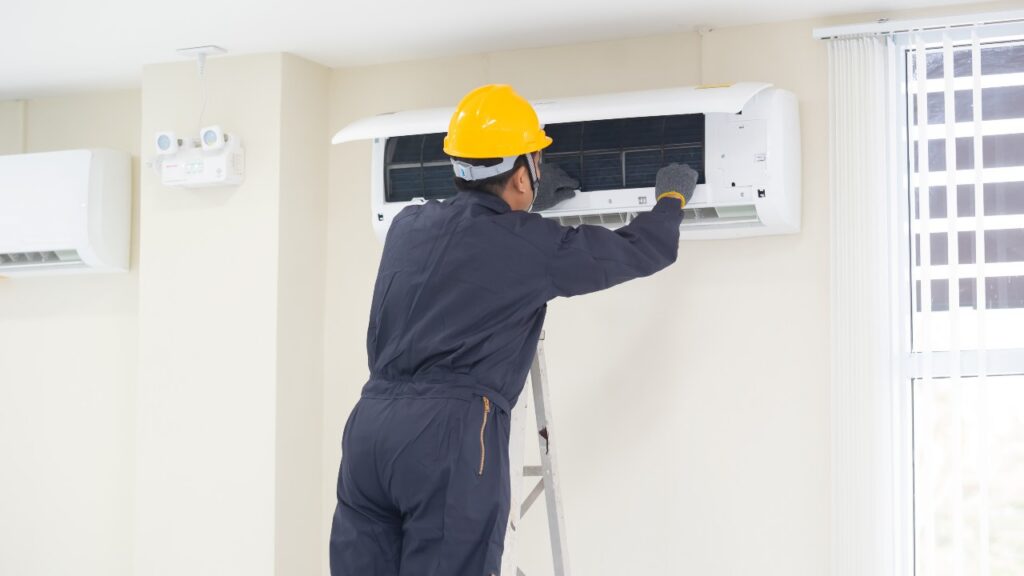
Add a high-efficiency filter in a one-inch slot on top of that and you have the equivalent of running a marathon breathing through a cocktail straw. Variable-speed blowers, including the Carrier equipment we install as certified Carrier experts, will typically ramp up to hold airflow, which keeps you comfortable while quietly running the motor hotter than it should. Older single-speed motors just move less air, so the coil runs colder and the temperature split drifts. Most of the systems we test in older Milledgeville homes are already tight on return air before anyone touches a door.
Blower Motor Damage From Closed Bedroom Doors
A call over in Covington a couple summers back is the one I use to explain this. The homeowner had already replaced a blower motor that failed young, and the new one was starting to make the same noise. Nothing wrong with the equipment.
The house had one hallway return, a restrictive pleated filter jammed in a one-inch slot, and four bedroom doors that stayed shut all day for pets. She told me, “the hallway howls when it kicks on.” That howl was the return grille trying to pull the whole house through one opening. We changed the filter approach and added transfer paths, and the strain went away.
This is the part that frustrates me, honestly. She did three things right, kept the filter fresh with regular air filter changes, kept the equipment serviced, and the one wrong thing was invisible until it had already eaten a motor.
Do Closed Doors Save Energy on AC?
No. In most homes, closing doors costs you money rather than saving it. The pressurized bedroom pushes conditioned air out through every crack around the window frames and ceiling penetrations, and the depressurized main body of the house makes up the difference by pulling unconditioned air in from the attic, the crawlspace, or outside. In August, that replacement air is hot and soaked.
We’ve seen this backfire on people who shut off and closed up two spare bedrooms thinking they were trimming the bill, then watched the bill climb because the system ran longer to hold the rest of the house. Do closed bedroom doors increase utility bills? In a leaky house, the answer is yes, and it’s one of the HVAC mistakes that quietly drive up your energy costs. The savings people imagine assume the system stops conditioning that room, and it doesn’t, because the ductwork doesn’t know the door exists.
HVAC Airflow Statistics and Data
The numbers behind all this aren’t kind to bad airflow habits in our part of the state.
| What the data shows | Figure |
|---|---|
| Static pressure increase from closing 3 bedroom doors in a single-return home (ACCA field study estimates) | 20 to 30% beyond design limits |
| How much Georgia’s high humidity can shorten equipment lifespan | 20 to 30 percent |
| Repair reduction with consistent professional maintenance (industry benchmark) | up to 40 percent |
| Years ACS has worked on this region’s duct systems | 58 and counting |
That lifespan number is the one I point at. Humidity already works against your equipment here, and choked airflow stacks on top of it. Consistent tune-ups through our preventive HVAC maintenance plans claw a lot of that back.
Ductwork Integrity and System Performance
Leaky ducts are their own problem, separate from anything you do with a door. In older Baldwin County homes we still find return runs built out of panned floor joists and duct joints that have never seen mastic, and when the house pressure goes sideways, those leaks become intake ports. The system starts ingesting crawlspace air, insulation fibers, whatever is living down there.
That isn’t an airflow debate. That’s biology and gravity, and it’s why duct sealing, which ENERGY STAR recommends as a top home efficiency measure, pays for itself in air quality before it pays for itself in comfort. Properly sealed ductwork also supports healthy indoor humidity control, a particular concern in Middle Georgia where infiltration-driven moisture loads are significant.
And then there’s the furniture. We have pulled baby gates, a shoe rack, and once a full laundry hamper off return grilles. The grille doesn’t care what is blocking it, keeping your vents clear and open is one of the simplest things you can do for system health. Pressure imbalances. Real trouble.
One more thing, sharply: if your indoor coil ices up, shut the system off. Do not keep running it to see what happens. We see more frozen coils in August from blocked airflow than from actual refrigerant leaks.
Balancing HVAC Airflow With Doors Closed
Closing bedroom doors raises static pressure beyond what the duct system was designed to handle, that is the whole reason transfer grilles and jumper ducts exist. A transfer grille is a passive opening between the bedroom and the hallway, high on the wall.
A jumper duct does the same job through the attic, connecting a ceiling grille in the room to one in the hall, and it handles sound better. A dedicated return in the bedroom is the cleanest fix of all when the layout allows it.
Now, the honest messy part. I used to tell people a generous door undercut solved most of this, and I have walked that back. A big undercut kills sound privacy and still may not pass enough air for a large master suite.
My lead installer prefers through-wall transfer grilles because they’re quick and rarely go wrong; I lean toward jumper ducts when attic access is decent. He may be right more often than I admit, at least for smaller bedrooms. I am also not covering HVAC zoning systems with motorized dampers here, because most homes in our area do not have them and they change the math entirely.
Should You Keep Bedroom Doors Open?
Keep doors open while the system runs if your home has a single central return, and close them freely if the room has its own return or a proper transfer path. That’s the whole rule.
Even cracking the door a few inches at night moves a surprising amount of air compared to a shut door riding on carpet. Newer construction sometimes includes a return in every bedroom, and if that’s your house, shut the doors and sleep well.
But most of the housing stock we work on around Lake Oconee and out toward Gray was built long before anyone thought about bedroom returns.
Closing Bedroom Doors and HVAC Airflow Checklist
Run through this once with the system blowing and you will know where you stand:
Walk the house with the blower running. Stand at each closed door and feel for air forcing its way underneath. Listen for whistling or a door that slams itself shut when the system starts. That door is telling you the room is pressurized, and it will keep telling you until someone fixes the return path (the door doesn’t get tired). Look at the return grille. Nothing stacked against it, no rug creeping over it, no hamper. Pull the filter and hold it to the light. If you can’t see through the pleats, replace it, and confirm your blower can actually handle the MERV rating you bought. Crack doors two or three inches at night if the room has no transfer grille or return of its own.
In many cases, a homeowner will try every fix imaginable, repainting, re-curtaining, blaming the window, before anyone thinks to check the closed door and the missing return path. A jumper duct typically settles that kind of room in one visit.
So if one room in your house runs hot behind a shut door, or a return vent whistles, call Air Conditioning Specialist, Inc. in Milledgeville or Covington and just describe the room. We will take it from there with a proper airflow and duct assessment.
By the Air Conditioning Specialist Inc. Team
Frequently Asked Questions
Does closing bedroom doors make the room hotter or cooler?
Closing a bedroom door typically makes the room hotter, not cooler. When a door is shut, the supply register continues pushing conditioned air into the room while the return air path is blocked. The room pressurizes, which resists the entry of new conditioned air. The hallway thermostat satisfies and shuts the system off early, so the bedroom receives less cooling at the exact moment it needs the most.
How much does closing bedroom doors affect HVAC static pressure?
Closing multiple bedroom doors can push static pressure 20 to 30 percent beyond the design limits of a typical residential duct system. Most homes, particularly older builds with a single central return grille, are already operating near their resistance budget before any doors are closed. Adding a restrictive pleated filter in a one-inch slot on top of closed doors compounds the problem significantly, forcing blower motors to work harder than they were rated to handle.
Can closing off unused rooms damage an HVAC blower motor?
Yes, closing off unused rooms can shorten blower motor life. When bedroom doors stay shut, the return air grille must pull air through a severely restricted path. Variable-speed motors compensate by ramping up, which runs them hotter than intended. Single-speed motors simply move less air, causing the evaporator coil to run colder and altering temperature performance. Either scenario creates chronic mechanical stress that can cause premature motor failure even when the equipment is otherwise well-maintained.
What is the best way to keep bedroom doors closed without hurting airflow?
The most effective solution for keeping bedroom doors closed without harming HVAC airflow is to create dedicated transfer paths between the closed room and the return air system. Common options include undercutting the door by at least three-quarters of an inch, installing transfer grilles through the wall, or adding a jumper duct that connects the bedroom ceiling to the hallway. Each approach allows pressurized air to escape the room and return to the system without requiring the door to stay open.