
Picture a Saturday in January when the windows have been shut for weeks and the furnace has run all day. Somebody’s on the couch with a headache they figure is the weather, and that’s honestly how carbon monoxide tends to show up in real life, so quietly you’d think it was something else, which is why our techs bring up the furnace safety inspection with every customer they see in the fall. Our tech spends that visit hunting for cracks in the heat exchanger and confirming the exhaust actually leaves the house. Gas pressure gets tested, so does how cleanly the burners are firing, and every safety switch gets put through its paces before we pack up. It isn’t a long appointment, and what it protects you from is something you’d never see, smell or taste coming.
Plenty of gas furnaces go years without giving anybody a lick of trouble. Metal gets tired, though, and vents get blocked and parts wear down, and most of the time there’s nothing on the outside of the cabinet to tell you it’s happening. So we push the furnace safety inspection every fall, and we’re pushing it harder this year because of the winter Georgia is expected to get. Forecasters are talking about a Super El Niño season, with sharp cold snaps, a lot more furnace run time and better odds of ice storms and power outages, and each of those makes carbon monoxide more of a risk at home.
If you need convincing, these three numbers usually do it for our customers:
- You’d probably guess low on how many people carbon monoxide hurts. Go look at the CDC’s figures and you’ll find unintentional carbon monoxide poisoning behind more than 20,000 emergency room visits a year, plus roughly 450 people who die from it, which is a lot of families for something nobody can smell.
- Most of those poisonings happen while the heat is on. The CDC went through poison center data and found slightly more than half of carbon monoxide poisonings happened between November and February, which happens to be exactly when furnaces and space heaters are running nonstop.
- And heating equipment starts a lot of fires, too. The National Fire Protection Association’s average for 2020 to 2024 works out to 37,365 home heating equipment fires a year, and if you add up the damage, it comes to $1.2 billion in property lost.
Below we’ll get into how a furnace ends up making carbon monoxide in the first place, what we actually do during a furnace safety inspection, and the stuff you can handle yourself to keep your family safe in between.
Understanding carbon monoxide and your furnace
Something that catches people off guard is that every furnace burning fuel makes a little carbon monoxide, even a brand new one, and that by itself isn’t a problem. A healthy furnace keeps that gas sealed up inside until the vent takes it outside. Where it goes wrong is when something gives the gas a path into the air your family’s breathing, which is what a furnace safety inspection is designed to catch.
What carbon monoxide is
In the trade we just call it CO. It forms whenever natural gas, propane, oil or wood burns without quite enough oxygen, and since it has no color, no smell and no taste at all, you’d have no way of picking up on it by yourself.
What makes it dangerous is what it does once it’s in your lungs, where it pushes oxygen out of your bloodstream and takes its place. A little bit gives you headaches, tiredness and nausea that almost everybody mistakes for the flu, and a lot can cause confusion, loss of consciousness and death. You don’t get a warning from CO, so the protection has to come from prevention, meaning a furnace safety inspection every year and detectors that actually work.
How a furnace can end up leaking carbon monoxide
If you could see inside a gas furnace, you’d find the fuel burning in a sealed metal box we call the heat exchanger. The flames get that metal hot. Your house air gets blown across the outside of the box and warmed up, and meanwhile the exhaust heads out the flue or vent pipe, which means the combustion gases and your indoor air never actually meet as long as the box and the venting hold together.
Our worry starts when they don’t hold together. A cracked heat exchanger can let exhaust slip into the same air that’s on its way to your bedrooms, and a vent that’s clogged or has pulled apart at a joint leaves those gases nowhere to go except back inside the house. Dirty burners or a starved air supply make the furnace burn incompletely, which creates more CO to begin with, and the part that worries us is that none of this happens overnight, it creeps up quietly over a couple of seasons.
Why winter is peak season
Carbon monoxide trouble always climbs when the heating system is working its hardest. The furnace runs longer and more often, the house is buttoned up tight against the cold, and the minute the power goes out, people start grabbing whatever backup heat they can find.
That last part is the one that keeps us up at night this year. Ice storms are one of the biggest threats in an El Niño winter, and when the lights go out we see people run generators, grills or the gas oven just to stay warm, and those are some of the most common causes of carbon monoxide poisoning there are. If your furnace has had its furnace safety inspection and is ready to come back on, there’s a lot less temptation to reach for something unsafe.
What a furnace safety inspection includes
When we do a furnace safety inspection, most of our attention goes to the parts that keep combustion gases sealed in and send them outside. If carbon monoxide is what you’re worried about, these are the checks that count.
Inspecting the heat exchanger
Ask any of our techs which part of a furnace safety inspection matters most and they’ll all say the heat exchanger. Think about what that metal goes through, getting hot and swelling every time the furnace fires and then cooling and shrinking back down when it shuts off, over and over for years. Enough winters of that and small cracks can open up, and we find them most on older furnaces or on ones that have been overheating for a while because the airflow was bad.
Our techs check it by looking at it, plain and simple, with a mirror and a flashlight and sometimes a little camera on a cable when the gaps are too tight to see into. One trick our older techs swear by is watching the burner flame right at the second the blower kicks on, because when there’s a crack, the moving air gets into it and you’ll see the flame jump or roll or bend out of shape. Finding a crack is the one time we’ll look you in the eye and say that furnace can’t run again until it’s been repaired or replaced, and yes, we’ll say it in January too.
Venting, flue and draft checks
The vent system is the exhaust’s way out of your house. Older standard furnaces usually have a metal flue going to a chimney or up through the roof, and high-efficiency ones use white plastic pipe that comes out a side wall or the roof instead.
Our tech follows that whole run looking for rust, gaps, loose joints and sagging sections, plus anything clogging it up, like a bird’s nest or a wad of leaves. Then comes the draft test, which tells us whether the exhaust is really flowing up and out or spilling back into your home. We’ve seen vents that looked perfect and still had a weak draft, so in our furnace safety inspection the draft test is never optional.
Gas pressure, burners and combustion testing during a furnace safety inspection
Clean, complete burning keeps the carbon monoxide down to almost nothing, which is why we spend a good part of any furnace safety inspection fussing over the burners. The burners get inspected and cleaned until we’re seeing a steady blue flame, and then we put a gauge on the gas pressure and compare it to the manufacturer’s number, because pressure running high or low will throw the whole combustion off.
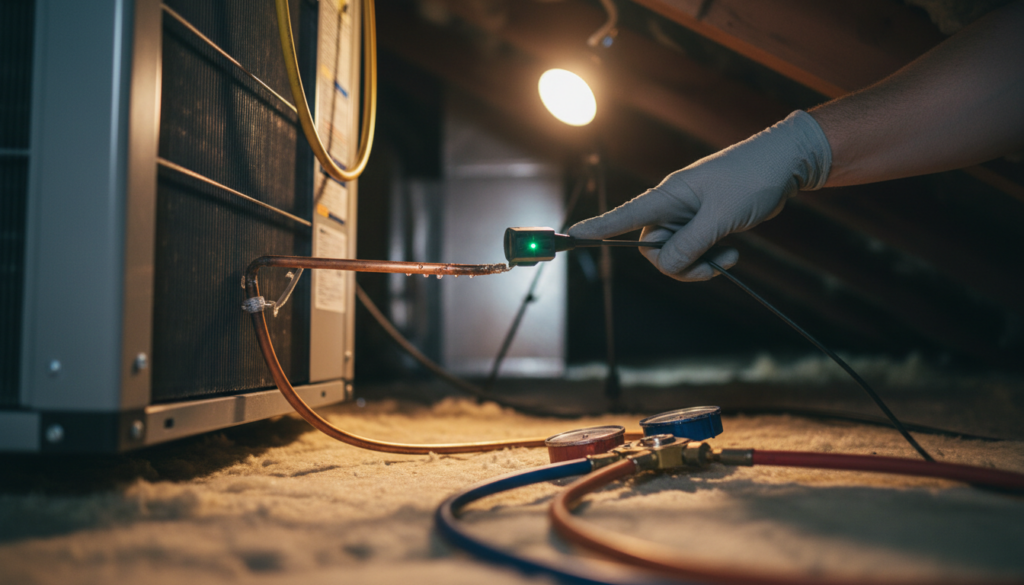
For a furnace safety inspection, most of our guys also carry a combustion analyzer, which is a handheld tool that reads the CO and other gases right in the exhaust. Instead of eyeballing the flame and guessing, that gives us an actual number for how clean your furnace is burning, and they may sample the air near the furnace and around the supply registers for any trace of CO while they’re at it.
More furnace safety inspection checks technicians perform
Carbon monoxide is the big one, but a good furnace safety inspection doesn’t stop there, because overheating, electrical problems and fire are all on our list too.
Safety switches and limit controls
Today’s furnaces have several safety devices built in, and each one exists to shut the system down when something goes wrong. The high limit switch is the one that shuts off the burners when the furnace runs too hot. Then there’s the rollout switch, which kills everything if flames ever roll out of the burner area where they belong, and high-efficiency furnaces add a pressure switch that refuses to let the burners light until it’s sure the vent is clear.
Those switches are only worth anything if they work, so our tech tests each one to see that it responds the way it’s meant to. We find failed switches more often than you’d think, and every so often we find one that somebody bypassed with a jumper wire just to get the heat back on, which honestly scares us more. Either way the furnace can keep running in a dangerous condition, and that’s why testing those switches is part of every furnace safety inspection we do.
Electrical connections and wiring inside the cabinet
Even a gas furnace leans on electricity for a lot of what it does, from the igniter and the blower to the inducer motor and the control board. After enough years of shaking and heat, connections work loose and the insulation on the wires starts breaking down, and wiring in that shape can run hot, so it’s a fire risk on one hand and one of the more common breakdowns we get called out for on the other.
So on a furnace safety inspection the tech looks over the wiring and terminals, tightens up anything that’s worked loose and measures how much power the main motors are pulling. A motor drawing too much is basically telling you it’s struggling and might quit soon, and sometimes when it goes it takes a couple of other parts with it.
Air supply and clearances
A gas furnace needs a steady supply of fresh air to burn its fuel all the way. Tuck it into a closet that’s too tight or pile boxes up around it and it can start running short on air, and a furnace that’s short on air makes more carbon monoxide.
So during the furnace safety inspection we look at the combustion air openings and the room around the unit. If there’s a fire hazard sitting there we’ll mention it, and in a lot of the houses we visit that means paint cans, cleaning chemicals, cardboard boxes or the laundry that never quite made it to the washer. We tell everybody to keep at least three feet of open space around the furnace and the water heater, and the NFPA notes that not keeping heating equipment clean and clear is one of the leading factors in home heating fires.
Carbon monoxide detectors and warning signs
A yearly furnace safety inspection takes a big chunk out of the risk, but we can’t stand watch over your furnace every day of the winter. For all those days between our visits, you’re covered by your carbon monoxide detectors and by knowing the signs, and we’ll go through both here.
Where to put detectors and how to keep them working
Put a carbon monoxide detector on each floor of the house, counting the basement, and make sure there’s one near wherever people sleep, since a detector down the hall from a closed bedroom door won’t always wake anybody. When the furnace lives in a garage or a utility room or some other attached space, we like a detector close to it as an extra layer, mounted at whatever height the manufacturer’s directions call for.
Once a month, as part of your own furnace safety inspection routine, push the test button on each one, and change the batteries at least once a year (a lot of folks do it when the clocks change, which makes it easy to remember). The date on the back matters as well, since most carbon monoxide alarms need replacing every five to seven years (our post on checking your carbon monoxide detectors before winter goes into more detail). We’re fans of the combination smoke and CO alarms because there’s one less thing to keep track of. If yours plugs into the wall, though, make sure it has a battery backup, since the night the power goes out is exactly the night you’d need it.
Symptoms of carbon monoxide exposure to watch for
Because there’s no smell to CO, your own body sometimes ends up being the first alarm. Headaches and dizziness usually show up early, along with weakness or nausea, and as it gets worse you can get short of breath or confused, which is exactly the kind of thing people brush off as the flu or a cold or a long week.
The pattern is what we’d watch. Say everybody in the house starts feeling sick at the same time, or you feel better at work and worse the minute you walk back in the door, or the dog has been sleeping more than usual, and in any of those cases carbon monoxide could be the cause, especially since older adults, young kids, pregnant women and people with heart or lung conditions are hit hardest.
What to do if your alarm sounds
We’ll say it plainly: don’t ever ignore a carbon monoxide alarm. Get everybody out of the house into fresh air, pets too, and once you’re outside, call 911 or your gas utility, and stay out until the emergency responders tell you it’s safe to go back in.
Anyone with symptoms should get medical care right away and let the doctors know you suspect carbon monoxide. Then, before that furnace runs again, have a qualified technician come out and do a furnace safety inspection, because switching it back on without finding what caused the alarm can put your family right back in harm’s way, and it’s why we keep an emergency service line open.
Scheduling your furnace safety inspection
Good timing and the right technician make a furnace safety inspection worth a whole lot more. Here’s what we’d tell you before you book.
How often you need a furnace safety inspection
Every gas furnace ought to get a furnace safety inspection once a year, and early fall, before heating season really starts, is when we’d do it. That way if something turns up, it gets fixed while it’s still mild outside instead of during the first cold snap, when you need the heat and so does everybody else.
There are times we’d tell you not to wait for fall to get a furnace safety inspection. If your carbon monoxide alarm has gone off, if you’ve spotted soot or a yellow flame, if the furnace has sat unused for a long stretch, or if you just bought the house and have no clue what the system has been through, call us now. Furnaces past about 15 years old deserve a close look too, since heat exchanger cracks get more likely with age, and if we find one we’ll walk you through furnace repair and replacement options honestly.
Extra risks this winter
The forecast for a strong El Niño points to a wetter winter for Georgia, with sharp swings between mild days and Arctic cold and a bigger chance of ice storms (here’s how El Niño and La Niña each change the winter). What that does to your furnace is pile on cycles and stress on the heat exchanger, and it gives ice, debris or snow more chances to block the vents outside.
The outages are their own problem. During and after an ice storm we see people run portable generators, grills and other fuel-burning gear to stay warm, which are some of the most common sources of carbon monoxide poisoning, so please never run a generator, grill or camp stove inside your home or garage, and keep generators well away from windows and doors. A furnace that’s working safely and detectors with good batteries are still the best defense you’ve got.
Choosing the right technician for a furnace safety inspection
We’d go with a licensed, insured HVAC company that works on gas furnaces all the time, not once in a while. When you call around, ask them straight out what their furnace safety inspection covers. If you don’t hear the heat exchanger, a draft test, gas pressure and combustion testing with an analyzer in the answer, what they’re selling is closer to a quick look than a real inspection.
Our own rule for the guys is pretty simple. If you can’t explain what you found to the homeowner without the jargon, you don’t understand it well enough yet, so they’ll show you photos on the phone when it helps and they’ll leave a written summary behind. And on the rare day it’s something serious, like a cracked heat exchanger, we’d rather take a few extra minutes explaining the risk and your repair or replacement options than have you feel pushed into anything. A lot of our customers just bundle the furnace safety inspection with a full furnace maintenance tune up so it’s all handled in one trip.
Frequently asked questions about furnace safety inspections
What is included in a furnace safety inspection?
Ours starts at the heat exchanger and moves out from there to the vent and flue, a draft test, the gas pressure, how the burners look and a combustion test with the analyzer. We won’t close the panel back up until the safety switches have been tested and the loose connections tightened, and we’ll also make sure the furnace is getting enough combustion air and has room to breathe, since in our book a furnace safety inspection that skips that part isn’t done.
How often should my furnace be inspected?
For most homes, one furnace safety inspection a year in early fall does the job. Call us sooner than that if your carbon monoxide alarm has ever gone off or you’ve caught soot or a yellow flame. A house you just closed on counts too, at least when the sellers couldn’t remember the last time somebody serviced the furnace.
Can a furnace really leak carbon monoxide?
We wish the answer were no, but yes, and in the cases we’ve run into it’s most often been a cracked heat exchanger. Blocked or disconnected vents do it too, and so does a furnace that’s burning dirty, so our advice is the same as always, a furnace safety inspection every year plus detectors you’ve actually tested.
What are the symptoms of carbon monoxide exposure?
It tends to creep in as a headache or a dizzy spell, sometimes with weakness or nausea mixed in, and if the exposure keeps going you can end up short of breath or confused. We’d be most suspicious when the whole family feels off at the same time, or when everyone’s fine at work and school and then sick again by dinner.
What should I do if my carbon monoxide alarm goes off?
Leave, and take everybody with you, pets included. Once you’re out in the fresh air you can call 911 or your gas utility, and after the responders say the house is clear, the furnace stays off until a technician has inspected it and found out what set the alarm off.
Where should carbon monoxide detectors go?
Every level of the house gets one, and so does each sleeping area. Hit the test button monthly and swap the batteries every year, and plan on buying new alarms every five to seven years, since the sensor inside doesn’t last forever even when the light still comes on.
Why is a furnace safety inspection more important this winter?
Because the forecast is calling for a strong El Niño, and for Georgia that usually means sharp cold snaps and a higher risk of ice storms. That’s more hours on the furnace and more nights without power, and the carbon monoxide risk goes up from both directions, from the furnace working harder and from the unsafe backup heat people reach for during an outage.
Protect your family before heating season
A furnace safety inspection is a small thing to schedule, and the peace of mind you get from it is real. It tells you your heating system is sealed up, venting the right way and running safely, so you can keep the house warm all winter without wondering about what you can’t see.
The Air Conditioning Specialist handles furnace safety inspections for homeowners in Covington, Milledgeville, Augusta, Athens and the surrounding Georgia communities. Our technicians go through the heat exchanger, the venting, the combustion and the safety controls, and then they sit down and explain what they found in plain language. Give us a call to set up your furnace safety inspection, and we’ll make sure your family heads into winter with one less thing to worry about.