
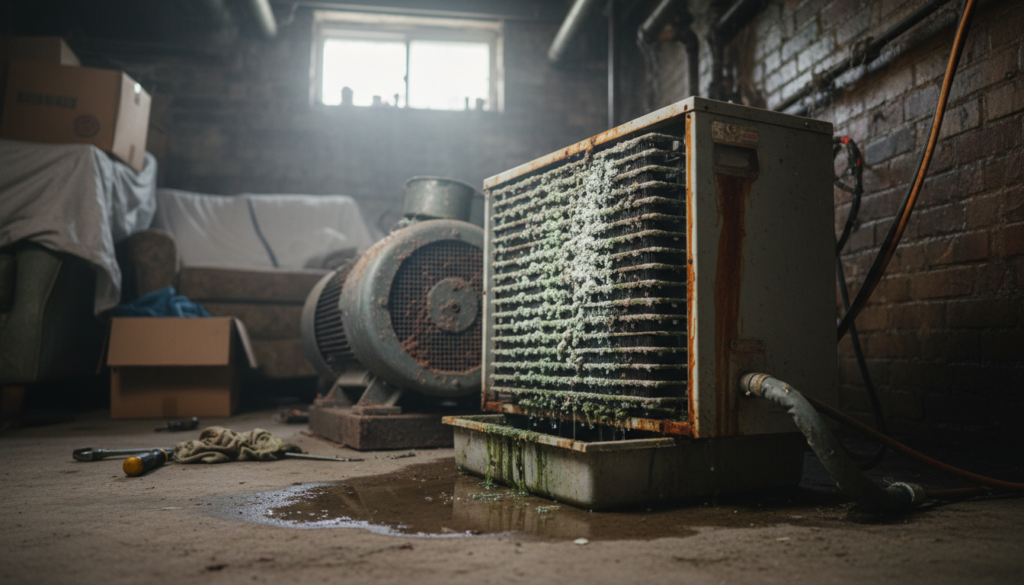
Most of the AC repair calls we run out of Milledgeville have nothing to do with heat. They come from water, specifically the water hanging in the air. The high humidity Central Georgia carries from April clear into October puts a moisture load on cooling equipment that rusts coils, clogs drains, and wears down blower motors long before the thermostat ever fights a hundred-degree afternoon.
Here is the number that surprises people. According to NWS Central Georgia climatology data, Georgia only hands us somewhere around a few dozen genuinely hot days in a typical year.
But the humidity shows up months before the heat and hangs around months after it leaves. So your system spends far more of its life fighting moisture than fighting temperature, and in our climate that constant dampness can shave 20 to 30 percent off the working life of the equipment. That isn’t a small tax. That’s the difference between replacing a system when your kids are in middle school versus when they graduate.
The trade term for all this is latent load. Latent load is the moisture half of the cooling job, the work your AC does pulling water out of the air instead of pulling heat out of the room. On a muggy July afternoon out by Lake Sinclair, a healthy system can wring gallons of water out of your indoor air over the course of a day.
All of that water condenses on one cold piece of metal, runs into one pan, and leaves through one skinny drain line. When any part of that path fails, the water does not politely wait. It goes where gravity takes it, and gravity does not care that the ceiling under your attic air handler was just painted.
And that is really the point of this whole guide. Managing high humidity in Central Georgia isn’t about saving a few bucks on the power bill (though it helps there too). It’s about keeping your system from turning into a swamp before the real heat even arrives.
Whether you’re in a ranch off North Wayne, a newer build over in Covington, or one of those older places near West Hancock with ductwork that predates half my technicians, the moisture is doing the same slow damage. The heat gets the blame. The water does the work.
Before we get going, one note on priorities. Drainage and airflow matter more than everything else in this article combined. If you only fix two things after reading, fix those two.
What High Humidity Central Georgia Does to Coils
Humidity attacks your evaporator coil first, because that cold coil is where every drop of moisture in your house eventually lands. The coil is designed to be wet during operation, sure.
But it is designed to be wet, drain, and dry out. In a high humidity Central Georgia summer, some coils never get a dry hour for months, and constantly wet metal plus dust plus darkness is exactly the recipe for corrosion and biological growth on the fins.
Here is a real one. A homeowner out in Baldwin County, off a rural route, called us swearing the unit was leaking refrigerant because there was water everywhere around the air handler. No leak.
The primary drain path was choked with a paste of humidity-fed growth and Georgia dust, the pan was overflowing, and the water had been sitting against the coil and cabinet long enough to start rusting the works. The fix was drainage, not refrigerant. But the rust on those fins was permanent, and rusted fins reject heat worse, which means longer run times, which means more condensate. The system was digging its own hole.
The blower pays too. Pushing air through a soaked, half-fouled coil is like breathing through a wet towel, and the motor works harder every hour of every humid day to do it. The DOE’s guidance on HVAC humidity control in hot, humid climates explains why equipment working under these conditions ages faster than the spec sheet assumes.
The Filter Mistake That Ices a Wet Coil
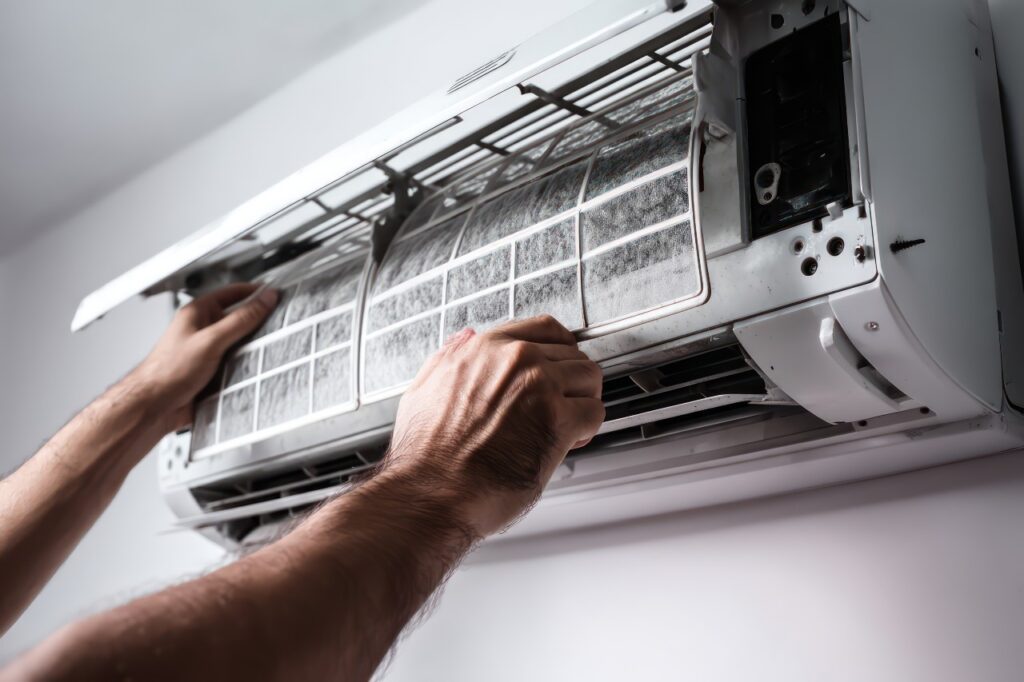
Every summer somebody decides more filtration is better and drops the highest MERV filter the store sells into a one-inch slot. We’ve seen this backfire in a specific way: the filter chokes airflow, the coil runs colder than it should, low airflow plus a cold coil pulls less moisture per pass, the house feels sticky, somebody drops the setpoint, the system runs longer, and eventually the coil ices into a solid block.
Then the ice melts. Then you have water damage and no cooling, which is an expensive combination.
I will say I go back and forth on where the MERV ceiling actually sits for a given house. Honestly, it depends on the return sizing, and in older Milledgeville homes that is a coin flip. I have guessed wrong on a couple of tight returns myself over the years, so now I check static pressure instead of trusting my gut. In many cases, measured static pressure across the filter and blower comes in well above what the blower was rated for, all because of a filter that promised allergy relief on the box. Confirm your blower can handle whatever filter you buy; there are hidden benefits to regularly replacing your air filter on schedule rather than stressing the system with the wrong one. That’s the whole rule.
And please, I am begging, don’t pull the filter out entirely in July to help the air flow. The coil becomes the filter. You don’t want the coil to be the filter.
Float Switches Are the Only Thing Guarding Your Ceiling
If your float switch has ever tripped, or you have ever seen a water stain under an attic unit, don’t just dry it and forget it. Test the switch. A float switch is the only thing standing between a slow drain clog and your ceiling, and in this climate the clog isn’t a maybe, it is a schedule.
If your system also trips the breaker when it tries to start, stop. Don’t keep resetting it to see what happens. Call somebody.
This is the part that frustrates homeowners, and I will admit it frustrates me too. They did three things right and one thing wrong, and the wrong one hides until humidity shows up. You would think after this many years I would stop being surprised by it. I have not.
Thermostat Habits in High Humidity Central Georgia
Lowering the thermostat does not dry out your house. It just makes the house colder and damper at the same time, because a system that short-cycles or runs flat out at an unrealistic setpoint never manages moisture removal the way steady, properly sized runtime does. Cold and clammy is worse than warm and dry. Ask anyone who has slept in a cold room with damp sheets.
“If the house feels sticky at a comfortable setpoint, temperature was never the problem. The system just never got the chance to wring the water out.” That’s what we tell folks on the phone, and it settles about half the arguments before we even roll a truck.
And then there’s the fan switch. Fan set to On instead of Auto. That’s the muggy-house switch.
I can’t count how many times we hear, we turned the fan on to help circulate, and the house immediately feels wetter. What happens is simple: the coil collects water during the cooling cycle, and then the fan keeps blowing across that wet coil after the compressor stops, re-evaporating the water you just paid to remove and sending it right back into the hallway. Auto. Leave it on Auto.
Bigger Equipment Makes a Damper House
An oversized air conditioner is a dehumidification failure you paid extra for. This is the single most common thing people get wrong when they replace a system, and it connects straight back to the thermostat section, because the sticky-house complaint at a comfortable setpoint is very often an oversizing problem wearing a comfort costume.
A too-big unit satisfies the thermostat fast and shuts off. Short cycles mean the coil barely gets cold and wet before the compressor quits, so almost no water leaves the air.
Temperature drops, humidity stays. We walked a house near Lake Oconee last summer with a 4-ton system on a footprint that needed maybe two and a half, installed by a previous outfit whose sizing method was apparently “go one bigger to be safe.” The homeowners had lived with clammy rooms and mildewed closet corners for three summers and had been told twice that nothing was wrong because the air coming out was cold.
Cold air out of the vent proves almost nothing in this climate. Runtime is where the moisture removal happens, and an oversized unit never runs long enough to do it.
When somebody quotes you a replacement without doing a load calculation on paper, that quote is a guess. Our complete Georgia AC repair and services guide walks through what a proper assessment actually involves.
Ductwork Sweats Too, Especially in Crawlspaces
The same condensation that forms on your coil forms on any duct surface that drops below the dew point, and around here summer dew points sit in the low seventies for weeks. Uninsulated or poorly sealed metal duct in a vented crawlspace will sweat like a glass of tea on the porch.
That water drips onto joists, wets insulation, feeds growth, and eventually somebody calls us about a moldy smell. The EPA’s mold and moisture guide notes that persistent damp building cavities create conditions that have nothing to do with the equipment itself.
Flex duct with crushed or waterlogged insulation is nearly as bad, because the compressed spots become cold stripes that condense moisture right through the outer jacket. We pulled a run out from under a 1971 ranch off Highway 22 last August that was heavy enough to need two men, and duct isn’t supposed to be heavy. It was carrying its own weight in absorbed water.
I am not going to get into crawlspace encapsulation and vapor barriers here, because that is a building-envelope job more than an HVAC job and it deserves its own conversation with somebody looking at your specific foundation. What I will say is that duct sealing and duct insulation checks belong in any serious tune-up in this part of Georgia, and the mastic matters more than the tape.
Where I Part Ways With the Dehumidifier Sales Pitch
Whole-house dehumidifiers get pushed hard in our market, and I have a more complicated opinion than the brochures do. When the AC is properly sized, properly charged, and running decent airflow, it handles the latent load for most Central Georgia homes most of the cooling season without help.
The dehumidifier earns its keep in the shoulder months, those mild damp stretches in April and October when it is 72 degrees outside, the AC barely runs, and the house creeps up past 60 percent humidity anyway. If you want to reduce home humidity before summer hits, those shoulder months are exactly the window to act.
A contractor friend of mine over in another county puts a dehumidifier in nearly every install and considers me stubborn for not doing the same. His argument is that homeowners never maintain airflow the way they should, so build in the insurance.
Mine is that a typical figure accessory shouldn’t be a bandage for a sizing mistake or a dirty coil. We have gone around on this at supply-house counters more than once and neither of us has moved an inch.
Refrigerant Charge, Maintenance, and the R-454B Situation
The drainage story from the coil section is worth revisiting here, because your annual service visit is where that whole path gets checked before it fails. When my techs run a proper tune-up in this climate, they’re verifying refrigerant charge, confirming the drain has slope and flow, checking the float switch, measuring static pressure across the filter and coil, inspecting the blower wheel for buildup, and measuring how well the system is actually handling the latent load, not just whether cold air comes out. Homeowners on a regular maintenance schedule typically see significantly fewer breakdowns in our experience.
Charge problems in a humid climate show up as comfort problems first. An undercharged system runs a warmer coil, and a warmer coil condenses less water per hour of runtime, so the house feels sticky before it ever feels warm.
Knowing the warning signs your air conditioner is low on refrigerant can help you catch this before it becomes a moisture complaint that has usually been there for weeks and gotten blamed on the weather.
There’s also a newer wrinkle worth knowing. The industry has been transitioning from R-410A refrigerant to R-454B, and supply of the new refrigerant has been tight, with prices swinging accordingly.
A system with a slow leak is a worse thing to ignore now than it was a few years ago, both because the repair costs more and because a chronically undercharged system in this climate is quietly losing the moisture fight the entire time. Leak search, repair, weigh in the charge. Topping off every spring isn’t maintenance; it is a subscription to the problem.
One Ceiling, One Weekend, One Clogged Trap
A family over toward Covington went to the lake for a long weekend two summers back. Attic air handler, primary drain clogged, no working float switch, secondary pan rusted through years earlier. The system ran the whole time they were gone, faithfully pulling water out of humid air and pouring it into the hallway ceiling.
They came home to sheetrock on the floor and a repair bill north of a typical figure before anybody touched the actual AC. The drain fix itself took my tech about twenty minutes. Everything expensive about that weekend was preventable with one switch that costs less than dinner out.
Moisture Warning Signs Worth a Same-Day Call
Your house will tell you when the moisture is winning, usually a few weeks before something breaks. So here’s what I would act on rather than watch:
A musty smell at the return grille or in one closet. That’s growth somewhere in the airstream or a damp cavity nearby, and mold in air vents does not improve on its own. Curtains, bedding, or door frames that feel damp to the touch. Wood doors sticking in their frames in June is the classic version around here. Gurgling from the drain line, or water pooling anywhere near the air handler. Stop what you’re doing and call. This is the one that ends with a ceiling repair, especially with attic units over finished rooms (the setup many Baldwin County homes have, and the one I trust least). A system that runs constantly but the house never feels dry. Could be charge, could be airflow, could be an oversizing problem from whoever installed it before us. Diagnosis first, guesses never.
We replace more secondary drain pans in April than in July. Not a coincidence. The first humid stretch of spring finds every drain that sludged up over winter, all at once, while everybody is still thinking about pollen on their trucks.
If any of that sounds like your house, especially the damp, musty attic-unit situation over a finished ceiling, call Air Conditioning Specialist Inc. at our Milledgeville or Covington locations and just describe what you’re hearing or smelling.
A faint mildew odor or a slight drip is plenty to go on. For emergencies we work to a prompt response window, but most of these moisture problems only need one thing to get ahead of them: a proper pre-season tune-up with the drain, the charge, and the float switch actually checked. That’s the visit to book.
By the Air Conditioning Specialist Inc. Team
Frequently Asked Questions
Does high humidity shorten AC system lifespan in Central Georgia?
High humidity in Central Georgia can shorten an AC system’s working life by 20 to 30 percent compared to what the manufacturer’s spec sheet assumes. The reason is constant moisture exposure: evaporator coils stay wet for months at a stretch from roughly April through October, which accelerates fin corrosion, biological growth in drain pans, and blower motor wear. That cumulative damage happens well before temperatures reach extreme levels, because the humidity season runs significantly longer than the peak heat season.
How do I know if my AC is struggling with latent load rather than just heat?
The clearest sign that your AC is fighting moisture rather than heat is a house that feels sticky and clammy even when the thermostat reads your target temperature. In Central Georgia, this often means the system is undersized for latent load, running in short cycles that cool the air without removing enough water vapor, or dealing with restricted airflow that reduces the coil’s dehumidification efficiency per pass. A technician can confirm by measuring indoor relative humidity: readings consistently above 60 percent indoors while the system is running point to a latent load problem, not a thermostat problem.
What MERV rating is safe for a central Georgia home with high humidity?
There is no single safe MERV rating for every home because the correct ceiling depends on the static pressure your blower can handle across the filter. In practice, many older homes in Milledgeville and surrounding Baldwin County have return duct sizing too restrictive to support filters above MERV 8 without reducing airflow enough to risk coil icing. The reliable approach is to measure static pressure across the filter and blower before upgrading filtration, rather than choosing a MERV value based on the filter’s marketing claims.
What does a float switch do and why does it matter in a humid climate?
A float switch is a safety device installed in the condensate drain pan of an air handler that shuts the system down when standing water reaches a set level, preventing overflow damage to ceilings and walls. In a high humidity climate like Central Georgia, condensate volume is substantial because a properly working system can remove several gallons of water from indoor air per day during summer. Without a functional float switch, a clogged drain line goes undetected until water overflows the pan, and by then the damage to surrounding structure is already done.