
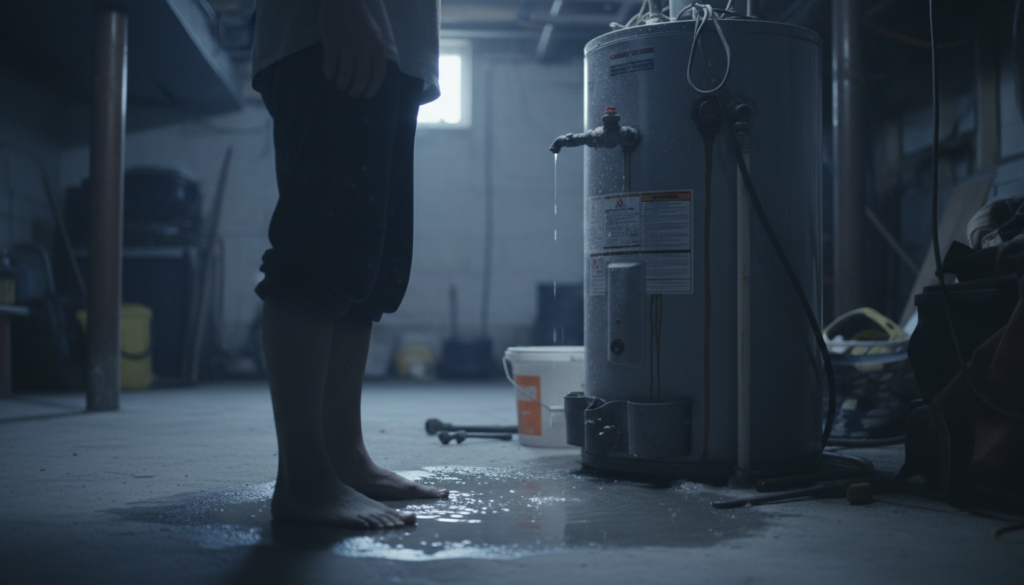
The five emergency signs that a water heater needs immediate professional attention are: rusty or discolored hot water, rumbling or banging sounds from the tank, lukewarm output that never recovers, a weeping T&P (temperature and pressure) relief valve, and standing water or a rust ring at the tank’s base. An emergency water heater repair is any situation where failure is active, imminent, or poses a safety risk, as opposed to a scheduled service visit for a unit that is still functioning normally.
But after fifty-eight years of taking these calls across middle Georgia, I can tell you the top signs emergency water heater repair in Macon is needed almost never show up as a flood on day one. They show up as rusty water at the tap, a rumble from the utility closet, a damp ring around the base of the tank, a relief valve that drips when nobody touched it, and hot water that quits or turns lukewarm for no reason you can name.
Those are the five. Everything else in this article is me explaining why each one matters, which ones can wait until morning, and which ones mean you should be shutting a valve off right now.
Air Conditioning Specialist Inc. has been doing this work since 1967, and we run calls from the Macon side of middle Georgia over through Milledgeville, Covington, Conyers, and out around Lake Oconee. Same red flags, week in and week out.
Some are nuisances. A couple of them are ticking time bombs sitting on your subfloor. Georgia humidity doesn’t help either; on the HVAC side of our business we see damp conditions shorten equipment life meaningfully, and your water heater lives in the same swampy garage or crawlspace as everything else.
One quick note before the details: a lot of folks around here assume a little moisture on the tank is just condensation, because in July everything in a Georgia garage sweats. Sometimes that is true.
But condensation doesn’t leave a rust ring, and it doesn’t come back after you wipe it dry on a mild day. Learn that difference and you are ahead of most homeowners I meet.
Emergency Water Heater Warning Signs at a Glance
| Sign | Severity | Urgency Tier | DIY-Safe? | Repair vs. Replace Threshold |
|---|---|---|---|---|
| Rusty or discolored hot water | High | Same-day | No, internal corrosion assessment required | Replace if tank wall is breached; repair (anode rod) if caught early |
| Rumbling / banging sounds | Moderate, High | Urgent, within 24 hrs | Flush only on tanks under 6 yrs old | Repair (flush, element) if no structural damage; replace if sediment has cracked lining |
| Lukewarm water, no recovery | Moderate | Urgent, within 24 hrs | No, element/dip tube diagnosis needed | Repair (element, dip tube, thermostat) if tank is sound |
| Weeping T&P relief valve | Critical | Immediate, shut down now | No, never cap or bypass the valve | Valve replacement if isolated fault; replace tank if pressure is uncontrolled |
| Standing water / rust ring at base | Critical | Immediate, shut down now | No | Replace, a leaking tank wall cannot be patched |
Rusty Water Is the Tank Announcing Itself
Rusty or discolored hot water is the single clearest sign your tank is corroding from the inside, and it’s the one people ignore the longest. When the glass lining inside a tank wears through, the steel underneath starts rusting, and that rust ends up in your shower and your coffee maker. You will notice a brownish or yellowish tint, sometimes a metallic taste, usually on the hot side first.
According to Rheem’s water heater warning signs guide, discolored water is among the most reliable indicators that internal corrosion has already taken hold. Georgia’s middle-county water hardness commonly runs above 120 mg/L (moderately hard to hard on the USGS scale), which accelerates lining wear compared to softer supply regions.
My rule of thumb after all these years: rust in the hot water only, suspect the tank. Rust in both hot and cold, suspect the pipes or the supply.
A homeowner over in Covington called us about a brownish tint in the kitchen tap. They had convinced themselves it was leftover sediment from a water main break down the street, and honestly, that was a reasonable guess for the first week.
By the time we got out there, a pinhole leak had been weeping into the subfloor long enough that the kitchen floorboards were cupping. The tank had been announcing itself for months. Nobody was listening.
Tank Rumbling and Banging Sounds: What Sediment Is Doing Inside
A healthy water heater is quiet. A rumbling, popping, or banging tank almost always means sediment has piled up on the bottom and is trapping little pockets of water against the heat source.
Those pockets flash to steam and pop. Middle Georgia water carries enough mineral content that this builds up faster than people expect, and every one of those pops is your tank overheating a small patch of steel that was never meant to run that hot.
The tank keeps working. The lining keeps cracking. And that is how you get from “it makes a funny sound” to “why is my garage wet.”
The sound itself tells you something too. A sharp crackle usually means light scale on an electric element. The deep kettle-drum rumble means a real sediment bed, sometimes an inch or two thick, enough to measurably insulate the burner from the water above it, sitting between the burner and the water it’s trying to heat. Gas units suffer worse from this because the flame is under the sediment, cooking it into a hard crust.
Research from Pacific Northwest National Laboratory on water quality and heating systems confirms that mineral deposits significantly degrade heating efficiency and accelerate tank wear over time, PNNL’s testing showed efficiency losses exceeding 10% in heavily scaled units before any other failure sign appeared.
Lukewarm Water That Never Quite Recovers
People live with sad, tepid showers for a shockingly long time, telling themselves the heater is “just getting old.” The cause is one of two things, and neither fixes itself.
A failing heating element on an electric unit is the most common culprit. The other is a broken dip tube, the plastic pipe that sends cold incoming water to the bottom of the tank; when it snaps, cold water short-circuits straight to your hot outlet and everything comes out half-warm.
A unit limping along on one element also runs longer cycles, which stirs up more sediment, which brings us right back to the rumble from the last section. These slow signs feed each other.
The ugly part is that rust, rumble, and lukewarm water are the gentle warnings. They give you weeks. The leak on the floor is what happens when all three got ignored.
A Weeping Relief Valve Outranks Everything Else Here
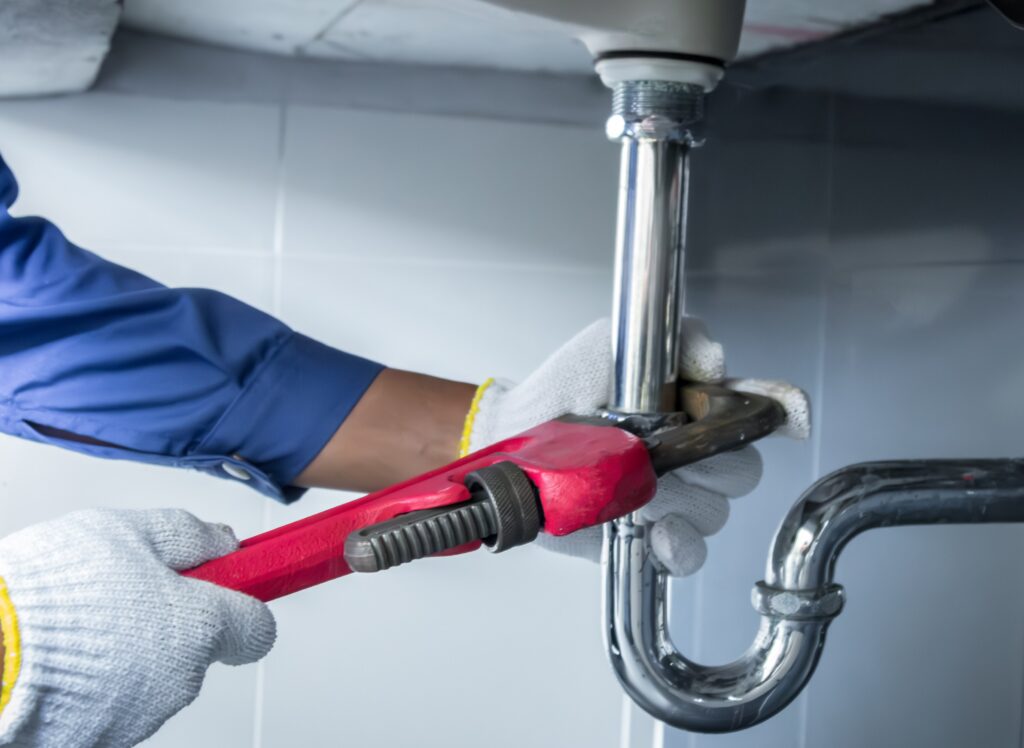
A weeping temperature and pressure relief valve is not a nuisance, it’s a code-red warning that pressure inside your tank is not being managed. ASME standards rate standard residential T&P valves to 150 psi and 210°F; when yours is discharging on its own, pressure or temperature inside the tank is approaching those limits. That valve and standing water at the base matter more than everything else in this article combined, and I want to say that plainly so nobody skims past it.
“The T&P valve is the last mechanical defense between a sealed pressure vessel and catastrophic failure. Silencing it is the one genuinely dangerous move a homeowner can make on this appliance.”, Air Conditioning Specialist Inc., Macon service team
Proper hot water heater safety means understanding that this valve is the last mechanical defense between a sealed pressure vessel and a catastrophic failure.
Don’t put a bucket under it and call it handled. Don’t crank the valve tighter to make the drip stop.
Same energy for water pooling at the base of the tank, especially if it smells faintly metallic. That is not condensation. That is tank water, and once a tank wall is leaking, no part on my truck fixes it. What you can control from that moment forward is how much water ends up in your house before help arrives.
Shut Things Down in This Order
If you find yourself standing over a leaking or weeping unit, here’s the sequence, and the order matters.
Shut off the cold supply first. There is a valve on the cold line feeding the top of the tank. Turn it clockwise until it stops. If it has not been touched since the Clinton administration and won’t budge, do not fight it with a wrench until it snaps; go shut off the main at the meter or where the line enters the house instead. A frozen valve that breaks in your hand converts a slow problem into a fast one.
Kill the power or gas second. Flip the breaker for an electric unit, or turn the gas control knob to off. A heating element firing in a draining tank burns itself out in minutes, and a gas burner running under a compromised tank is heating steel with nothing behind it.
Leave the drain valve at the bottom alone unless you know it works. We get calls every year from people who tried to flush a decade-old tank themselves and had the plastic drain valve snap off in their hand.
Then call somebody. Not after you mop. The mopping can wait. If water is near an electrical outlet or the unit sits in a finished space, mention that on the phone because it changes how we dispatch.
Take a photo of the data plate on the side of the tank while you wait. Model, serial, capacity. It saves a trip.
Supply Line Failures: The Water Heater Risk Nobody Puts on the List
Those flexible connectors on top of the heater have a service life, and it feels like we replace more burst ones every year, especially the old braided lines in homes out by the lake that sit through big temperature swings. A failed supply line floods a house just as thoroughly as a failed tank. Nobody puts it on their list.
If yours are older than ten years, replace them the next time anyone services the unit. Our Macon plumbing repair and water heater services team handles these replacements routinely as part of any water heater visit.
Age Is the Sign Everybody Overrates
People fixate on age like it’s the whole story. It’s not. I have a customer in Conyers with a tank going on twenty-two years old that still runs clean, because somebody has changed the anode rod on it three times over its life.
The anode rod is the sacrificial part that corrodes so the tank doesn’t, and most homeowners have never heard of it. Meanwhile, in many cases I have condemned units well short of their expected lifespan that had been running on untreated well water with no softener and no anode rod left at all, chewed through from the inside like a tin can in a fire pit.
So when someone tells me “it’s only eight years old, it can’t be the tank,” I do not take that to the bank. Age is a probability, not a verdict. Water chemistry, maintenance, and installation quality move the needle more than the calendar does.
The signs on your floor and in your faucet outrank the sticker on the side. ENERGY STAR’s guidance on when to replace your water heater echoes this, noting that performance history and maintenance records matter as much as the unit’s age.
Soot, Scorch Marks, and the Smell You Should Never Ignore
Soot around the burner access door on a gas unit means incomplete combustion, and incomplete combustion means carbon monoxide is on the table. Same for scorch marks above the draft hood, or a flame that burns lazy and yellow instead of tight and blue.
These aren’t “watch it for a week” symptoms; they fall squarely in the category of HVAC safety hazards that demand immediate attention. Shut the gas control off and get someone out there.
And if you ever smell gas near the unit, that is not a water heater call anymore. Leave the house, do not flip switches on the way out, and call the gas company from the driveway.
We will happily be your second call. I have walked into utility closets where the homeowner had been “smelling something funny for a few days” and kept lighting the pilot anyway. That one still bothers me.
A pilot light that keeps vanishing like a ghost, by contrast, is usually just a thermocouple or a draft problem. Legitimate repair, often a quick one.
What a Failure Actually Costs When You Wait
The supply line point from earlier is really a money point, so let me put numbers on the whole category. The Insurance Institute for Business & Home Safety studied water heater failures and found roughly three quarters of tanks fail from slow leaks or sudden bursts, and the average insurance claim ran to a typical figure after the deductible. That figure climbs hard when the unit sits on a second floor or in an attic, which is common in newer builds around Conyers.
Compare that to the repair calls that come in early. A thermocouple, an element, a thermostat, even a relief valve replacement, none of those come anywhere near four figures.
The last water heater emergency in middle Georgia homeowners dread most, the burst tank with cascading water damage, cost that family more than the previous fifteen years of maintenance would have. The math has never once favored waiting, not on a single call I can remember.
Controls or the Tank: The First Question We Answer on Every Emergency Call
The first job on an emergency visit is sorting one question: is the problem in the controls, or in the tank itself. Everything else follows from that answer. A faulty thermocouple on a gas unit, a tripped high-limit switch, a burned-out element, a bad thermostat, all of those are legitimate repairs and often quick ones. But if the tank has lost structural integrity, if the steel itself is compromised, no amount of parts replacement saves it, and I will tell you that straight rather than sell you a repair on a dead vessel.
So when you call, tell me exactly what you are seeing and hearing. Does it whistle or is it a deep thud? Is the water rusty on the hot side only? Is the floor damp at the base or under the connections on top? Those details genuinely change what we load on the truck. We keep 24/7 emergency water heater services in Macon staffed for exactly this kind of call, with a two-hour response target on true emergencies, and same-day appointments for the stuff that is urgent but not actively flooding.
Annual Tank Flushing: When to Flush and When to Wait
On flushing older tanks, I go back and forth, and I will admit that openly. The textbook answer is flush annually to control sediment, and on a tank under five or six years old I say do it without hesitation. On a fifteen-year-old tank that has never been flushed, I have seen the flush itself disturb enough sediment to expose a weak spot and start a leak that was not there before. Some plumbers I respect disagree with me and flush everything, and maybe they are right more often than I give them credit for. I have probably left a few tanks quietly deteriorating by being cautious, and I will never know which ones.
What I actually tell people is this: if it is old and quiet, a flush is a judgment call. If it is old and rumbling, have someone look at it before touching that drain valve.
Tank vs. Tankless Replacement During a Water Heater Emergency
Somebody standing in an inch of water is in no shape to make a fifteen-year equipment decision, and any contractor who pushes an upgrade at that moment is taking advantage. My advice in a true emergency is almost always the boring one: replace like with like, get hot water back today, and have the tankless conversation later over a kitchen table instead of a wet floor.
Part of the reason is the house itself. A lot of the older plumbing stacks around Milledgeville do not play nicely with tankless or high-capacity units without venting and gas line work. Our Macon water heater replacement specials can make a straightforward tank replacement far more affordable than most homeowners expect, but the heater is the easy part. The house around it is the variable. I am not going to get into tankless troubleshooting here at all, by the way, because it is a different animal with different failure signs and deserves its own article.
One odd thing I have noticed and cannot fully explain: the worst neglect we find is often in homes with newer HVAC equipment. People assume that because one big system was just replaced, the rest of the house is somehow covered. The water heater does not know your furnace is new.
If Your House Sounds Like Any of This Right Now
You would think after all this time I would stop being surprised by how often the emergency was preventable. But it is always the same handful of things. The valve was weeping for three weeks. The water was brown in October and the call came in February. Half of what we call emergency work is really just deferred maintenance with a deadline nobody knew about.
If the unit survives the visit, get it on a Macon water heater maintenance plan and let somebody lay eyes on the anode rod and relief valve once a year.
And if any of the top signs emergency water heater repair in Macon homeowners should watch for sounds like your house right now, especially rusty hot water or a valve that drips on its own, do not wait for the puddle to reach the drywall. Air Conditioning Specialist Inc. runs crews out of Milledgeville and Covington, Georgia, and we take these calls at (844) 256-6800. Tell us the one symptom that is bugging you, the sound, the smell, the stain, and we will start with a same-day emergency diagnostic visit.
By the Air Conditioning Specialist Inc. Team
Frequently Asked Questions
How long can a water heater last before it needs to be replaced?
Most residential water heaters last 8 to 12 years, with tank-style units on the shorter end and well-maintained units in low-mineral-content areas sometimes reaching 15 years. In middle Georgia, the mineral load in the water accelerates sediment buildup, which overheats the tank lining repeatedly and shortens that window meaningfully. If your unit is past 10 years and showing any combination of rusty water, rumbling, or moisture at the base, replacement is typically more cost-effective than repeated repairs.
Is it safe to keep using a water heater that is making a rumbling or popping noise?
A rumbling or popping water heater is not immediately dangerous, but it signals active sediment buildup that is degrading the tank lining and reducing heating efficiency with every cycle. The risk is not the sound itself but what the sound represents: steel that is repeatedly overheating in small patches, which eventually causes cracks or pinhole leaks. Continued use without flushing or service accelerates that damage, and gas-fired units are more vulnerable because the burner sits directly beneath the sediment bed.
What is the difference between a dripping temperature and pressure relief valve and a minor water heater leak?
A dripping temperature and pressure relief valve signals that pressure or temperature inside the tank is exceeding safe operating limits, which is a potential catastrophic failure risk and requires immediate attention. A minor leak at the base of the tank typically indicates internal corrosion has progressed far enough to breach the tank wall. Both require a licensed plumber, but the relief valve situation warrants shutting off the water supply and calling for emergency service the same day, not scheduling a routine appointment.
Why does hot water run out faster than it used to on the same water heater?
A water heater that recovers more slowly than it once did usually has a failing heating element, heavy sediment insulating the heat source from the water, or a broken dip tube. The dip tube is a plastic pipe inside the tank that directs cold incoming water to the bottom for heating. When it fractures, cold water mixes directly at the top of the tank and exits through the hot outlet, cutting effective capacity by as much as half. None of these conditions self-correct, and a unit straining on reduced capacity runs longer cycles that accelerate wear.