
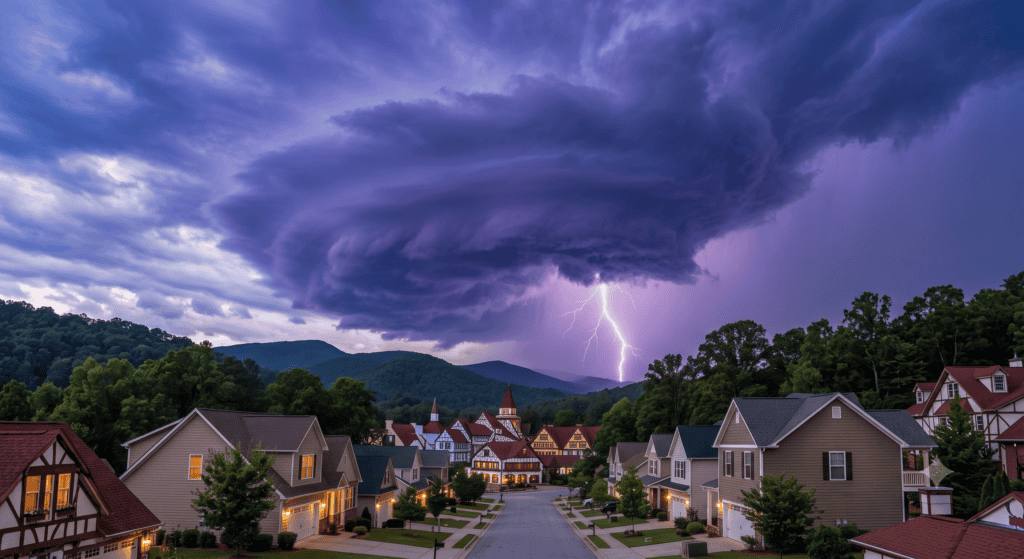
If you’ve been anywhere near a weather forecast lately, you’ve probably heard the words Super El Niño Winter thrown around for 2026 to 2027, and around here that usually means a wet, moody season with sharp cold snaps and a bigger chance of ice storms than any of us would like. Our advice to every Georgia homeowner we talk to is pretty simple. Get the heating system and the house ready now, while it’s still mild out and you can get on somebody’s schedule without a long wait, because that’s the cheapest way to protect your family and your budget.
So where does the forecast actually stand? The folks at NOAA’s Climate Prediction Center have the odds of a very strong El Niño this fall and winter sitting above 90%, and we’ve even seen a few forecasters say this one might end up among the strongest on record, mostly because of the loaded southern storm track they expect to keep shoving above-normal precipitation across the Southeast all season long. Nobody’s promising snow, but that setup does tilt things toward the kind of whiplash weather that runs heating systems ragged.
We get asked whether all the prep is really necessary, and these three numbers are usually our answer:
- Heating trouble peaks right in the middle of Super El Niño Winter. We had to read this one twice, but the National Fire Protection Association’s average from 2020 to 2024 was 37,365 home heating equipment fires a year, and close to half of those landed in the stretch between December and February when everybody’s heat is running hardest.
- Carbon monoxide gets more dangerous once the cold arrives. Slightly more than half of carbon monoxide poisonings happen between November and February, a CDC analysis found, and that’s the stretch when furnaces, space heaters and generators are working overtime.
- Your heating system is the big line on the energy bill. If a system struggles through a jumpy winter, you’ll feel it fast, since space heating and air conditioning make up 52% of a typical household’s annual energy use in the U.S. Energy Information Administration’s figures.
First we’ll explain what a Super El Niño actually means for Georgia, and then we’ll go through the same checklist we’d use on our own houses for the heating system, the home and the family.
What a Super El Niño Winter means for Georgia
It’s kind of wild that warm water thousands of miles away in the Pacific can decide how hard your furnace has to work in January, but that’s the whole story of El Niño. Here’s what forecasters expect this time, and why we pay attention to it in the heating business.
What is a Super El Niño Winter
Out in the central and eastern Pacific, right along the equator, the ocean sometimes runs warmer than normal, and that’s what El Niño is, a natural climate pattern that starts there. The warm water nudges weather patterns all over the planet, and one of the things it moves around is the jet stream over North America.
A Super El Niño is just that same pattern turned way up. During those years the subtropical jet stream likes to sag south and haul one storm after another across the southern United States, so the Southeast usually ends up with a wetter winter, more gray days, more rain and more chances for winter weather any time cold air is already parked over us (we went deeper on how El Niño and La Niña each change the winter in another post).
A wetter, more volatile Super El Niño Winter
The phrase forecasters keep using for this season is a battleground pattern for the Southeast. What that looks like at your house is a few mild weeks, then a sharp shot of Arctic air, then mild again, so you might have the windows cracked on a Tuesday and the heat running for hours by the weekend.
Heating equipment hates that. Each start puts some stress on the igniter, the motors and the electrical parts, and a winter full of quick swings means far more starts than a steady cold one would, which is exactly how a part that was already weak finally gives out. And with all that extra moisture around, the humidity creeps up inside the house as well as outside.
Ice storm risk across north and central Georgia
Ask anybody on our team what scares them most about an El Niño winter and they’ll say ice. It happens when warm, wet air from the Gulf rides up over a thin layer of cold air near the ground, and the rain freezes the second it lands on trees, roads and power lines, which is how you end up with limbs on the wires and no power for days.
Up in north Georgia, including Athens, Covington and Walton County, you’re closer to that battleground line, so snow and ice are more of a risk. Central Georgia communities like Milledgeville, Macon and Dublin tend to get rain instead of ice, though nobody’s completely off the hook. The strong El Niño winter of 1983 is a good reminder, since Atlanta saw eight separate snowfall events that year, a record March storm among them.
Checklist part 1: get your heating system ready for Super El Niño Winter
Think of your furnace or heat pump as the first line of defense in a winter like this. These three steps are how we’d make sure it’s clean, tested and ready before the first Arctic blast shows up.
Schedule a professional tune up before Super El Niño Winter
Of everything on this El Niño checklist, the professional tune up matters most. Our technicians clean and check the parts that take the worst beating during temperature swings, things like the igniter, the flame sensor, the blower motor and the capacitor. On a gas furnace they test the safety controls and look for carbon monoxide risks, and on a heat pump they’ll check refrigerant levels and the defrost controls.
Book it early in the fall, before El Niño’s first cold spell sets off a stampede of repair calls. A weak part found in October is usually a quick, cheap fix, and that’s a lot better than an emergency call in the middle of an ice storm, when every heating company around is booked and the roads may not even be safe to drive (both our furnace maintenance and heat pump maintenance visits cover all of it).
Change the filter and clear the vents
You’d be surprised how much trouble a dirty filter causes, all the way up to a furnace that overheats and shuts itself off because it can’t pull enough air. Pull yours out today and look at it. Most of the standard 1 inch filters we see need replacing every one to three months, sooner with pets in the house, so we’d check it once a month for the rest of the winter.
It’s also worth walking the house to find any vent or return grille that’s ended up behind the couch or under a rug. And go look at the furnace closet, because if paint cans, chemicals or boxes have crept in around the furnace and water heater, they need to go, and we’d want at least three feet of open space around both.
Test your thermostat and backup heat
Go switch the thermostat over to heat and push it up a few degrees past where the room is, and if everything’s working the way it should, you’ll hear the system start within a minute or two and feel warm air coming out not long after that. A dim display usually means the batteries are going, so put new ones in before they die on you some freezing night.
Heat pump owners have one more thing to check, and it’s the backup or auxiliary heat, since that’s what keeps the house warm during defrost cycles and the coldest part of an El Niño winter. If you have dual fuel, make sure it switches from the heat pump over to gas at the right temperature, and if you don’t know how to test either one, your technician can do both during the tune up.
Checklist part 2: prepare for ice storms and power outages
We’ve said it already, but ice storms are what worry us most about an El Niño winter, mainly because the power tends to go out with them. A little planning now goes a long way if you end up sitting in the dark.
Plan safe backup heat
A lot of people are surprised to learn that a gas furnace stops working in a power outage just like a heat pump does, because both need electricity to run. Where outages happen a lot, a standby generator is worth a conversation with a licensed contractor, as long as it’s installed properly and sized big enough for your heating system, and honestly it’s the safest way we know of to keep the heat on when the grid quits.
If what you’ve got is a portable generator, it stays outside, far from windows, doors and vents. The thing we’d beg you not to do is bring a generator, a grill, a camp stove or a gas oven indoors or into the garage for heat, because winter storms are when we hear about carbon monoxide poisonings, and those are a big reason why. It’s also worth tossing some extra blankets, warm clothes and flashlights in a hall closet now, and talking with the family about where you’d all go if the power stayed out for several days, because that’s a much easier conversation to have in October than in the middle of an ice storm.
Check your carbon monoxide detectors for El Niño season
You can’t see or smell carbon monoxide, which leaves the detector as pretty much your only warning. You want one on every level of the house and near every sleeping area. Go push the test button on each one, put in fresh batteries and look at the date on the back, because most alarms need to be replaced every five to seven years (we explain why we check carbon monoxide detectors before winter in more detail).
Plug-in detectors should have a battery backup so they keep working through an outage, and that matters because an outage is exactly when the risk climbs the highest. If one ever goes off, don’t stop to figure out why, just get everybody outside into fresh air and call 911 or your gas utility from there.
Protect your pipes and the outdoor unit
Pipes in crawl spaces, attics and outside walls are the ones that burst in a hard freeze. Wrap the exposed ones in insulation, unhook the garden hoses and shut the outdoor faucets off now, while it’s easy. On the really cold nights, we’d let the faucets on outside walls drip just a little and open the cabinet doors under the sinks so the house’s warmth reaches the pipes (and if one bursts anyway, our frozen and burst pipe repair crew can help).
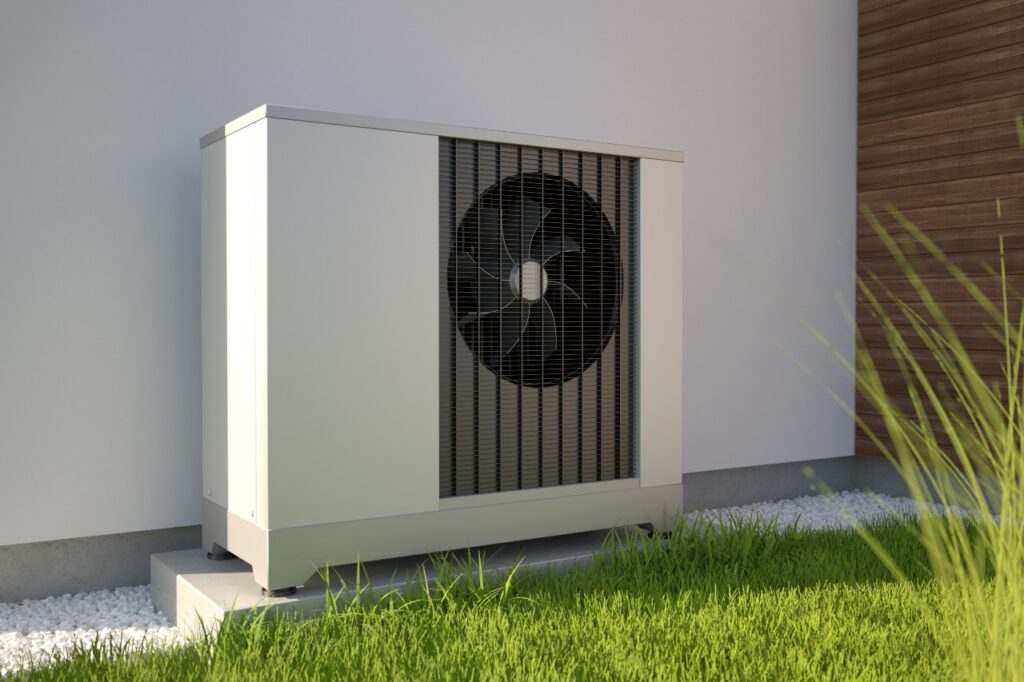
Got a heat pump? Give the outdoor unit about two feet of clear space, and while you’re out there, look up, because a gutter dripping on that unit all night can leave it wrapped in thick ice by morning. Covering it for the winter is a bad idea, since it has to breathe to heat the house. Once an ice storm passes you can gently clear the snow and ice away from the base, just don’t chip at the coils, and if the whole thing stays caked in heavy ice, put the system on emergency heat and call us.
Checklist part 3: manage El Niño moisture and indoor air quality
You know those gray February weeks when it’s too warm for the heat to run much, it drizzles every afternoon and the kitchen window is foggy every morning? An El Niño winter tends to deal us a lot of those, and they’re exactly when the dampness sneaks into your house, your ductwork and your crawl space without anybody noticing.
Keep an eye on indoor humidity in a damp El Niño winter
So how damp is too damp? We like to see a house somewhere around 30% to 50%, and on those mild, drizzly days with the heat barely coming on, plenty of homes drift past that without anybody noticing until the sheets feel a little clammy, which also happens to be what dust mites and mold have been waiting for.
Honestly the easiest way to stop guessing is a cheap digital hygrometer set on a bookshelf for a week. When it keeps reading high, the bathroom and kitchen fans are your first tool, and hanging the laundry somewhere besides the living room helps more than you’d think. And when that still doesn’t get it done, that’s usually where a whole-home dehumidifier comes into the conversation, since it works through the ducts you already have to dry out the whole house at once.
Check condensate drains and the crawl space
Here’s a strange fact about high-efficiency furnaces and heat pumps that catches people off guard: they make water, and they get rid of it through a skinny plastic line you’ve probably walked past a hundred times. Let that line clog and you’ll find out the hard way, either with a wet spot on the floor or with a safety switch shutting the heat off, so take a minute to trace it and look for kinks or drips, and if there’s a little condensate pump, pour some water in to see that it switches on.
While you’ve got the flashlight out, go have a look in the crawl space and the attic. Puddles, insulation that feels damp or a musty smell down there usually mean a moisture problem that’ll creep into the ductwork eventually, and with the amount of rain this El Niño is supposed to bring, we’d make sure the gutters and downspouts are really steering water away from the foundation.
Improve air filtration
Think about how a house works in winter, shut tight for weeks with the same air going round and round. Now add a damp El Niño season, and mold spores, dust and allergens have all the time they want to build up, which leaves your HVAC filter doing most of the defending.
If your system can take it, a better pleated filter is money well spent, though only if somebody remembers to change it. If somebody at your house fights allergies or asthma every winter, bring it up with your technician, since whole-home air purification or a filtration upgrade might be worth it for you. And if the vents give off a musty whiff right as the heat comes on, there’s a decent chance it’s mold in the ductwork or around the indoor coil, and we’d much rather come inspect and clean that than have you go at it with a spray bottle.
Checklist part 4: stay efficient through a volatile Super El Niño Winter
An El Niño winter’s temperature swings can make the energy bills bounce all over the place. The last few items on our list are about staying comfortable without paying for wasted heat, and about knowing when a problem is bigger than a homeowner fix.
Set up a smart thermostat schedule
For a winter full of ups and downs, a programmable or smart thermostat is about the easiest tool there is. Use one well and you could save roughly 10% a year on heating and cooling, by the U.S. Department of Energy’s estimate, so have it lower the temperature while everybody’s asleep or out, and bring it back up before you wake up or get home.
A smart thermostat goes a little further, since it learns your routine, adjusts for the weather and lets you run the system from your phone. With a heat pump, though, make sure you get one designed for heat pumps, or it may call for the expensive backup heat every time somebody bumps the setting up a few degrees.
Seal drafts and ductwork
A jumpy winter will find every leak your house has. Wait for the first really cold night and then run your hand slowly along the edge of a door or around the attic hatch, because you can usually feel the draft right away. Cold air finds its way in through doors, windows, attic hatches and plumbing openings, the warm air you paid for finds its way out, and it’s amazing what a few dollars of weatherstripping and caulk will do for a drafty bedroom.
Ductwork is easy to forget since it’s hidden away, but the ducts running through your attic or crawl space can lose a real share of your heat before any of it makes it to the bedrooms. If you’re up there anyway, look for sections that have pulled apart or insulation that’s torn, and if a couple of rooms never warm up no matter what you do with the thermostat, that’s a good reason to ask an HVAC pro about duct sealing.
Know when to call a professional this El Niño winter
There are a few things we’d never tell anybody to sit on during an El Niño winter, like cool air coming out of the vents when the heat is on, a system that cycles on and off every few minutes, banging or grinding noises, or a breaker that keeps tripping, and we’d want a call about a heating bill that climbs for no clear reason too. If you have a heat pump, add thick ice that never melts off the outdoor unit to that list, along with backup heat that seems to be running all day long.
A gas smell means you leave the house and call the gas utility from outside, and a carbon monoxide alarm means everybody gets out before anyone picks up a phone. If you’d like one less thing to remember, a maintenance plan books your seasonal tune ups for you, and it usually moves you to the front of the line when a cold snap sets off a flood of calls.
Frequently asked questions about a Super El Niño winter in Georgia
What is a Super El Niño?
It’s El Niño at full strength, a climate pattern driven by warmer-than-normal ocean water in the tropical Pacific. NOAA has the chance of a very strong event this fall and winter above 90%.
What will a Super El Niño winter be like in Georgia?
Wetter than usual, with above-normal precipitation across the Southeast, and jumpy, with mild stretches broken up by sharp cold snaps. The ice storm risk goes up as well, especially in north Georgia.
Will it snow more in Georgia this winter?
Maybe, but there’s no guarantee. The odds of winter weather go up when a wet pattern runs into cold air, and during the strong El Niño winter of 1983, Atlanta saw eight separate snowfall events, including a record March storm.
How do I prepare my heating system for an El Niño winter?
The tune up comes first in our book, and after that it’s changing the air filter, clearing the vents and making sure the thermostat and the backup heat both do what they’re supposed to do. Check your carbon monoxide detectors too, and have a safe backup heat plan ready in case the power goes out.
Is it safe to use a generator for heat during an outage?
It can be, if it’s a standby generator somebody installed properly, or a portable one running outdoors far away from windows, doors and vents. What’s never safe is running a generator, a grill or a gas oven inside, and those are some of the most common causes of carbon monoxide poisoning we hear about after a storm.
Why does humidity matter in winter?
Every week El Niño keeps the rain coming, the humidity inside your house tends to tick up along with it, and that’s what mold and dust mites and musty odors feed on, so keeping it somewhere between about 30% and 50% and checking your drains and crawl space now and then protects the house and your family’s air both.
When should I schedule my heating tune up?
As early in the fall as you can, ideally before the first cold snap. You’ll get an appointment more easily, and if something needs fixing, there’s still time before the winter weather arrives.
Get your home ready before the storms arrive
A Super El Niño winter doesn’t have to catch you flat-footed. If the heating system’s been tuned and the detectors tested, the pipes are protected and you’ve got an outage plan, your family can get through whatever this El Niño season brings without much drama.
The Air Conditioning Specialist helps homeowners in Covington, Milledgeville, Augusta, Athens and the surrounding Georgia communities get their heating ready for every kind of winter. Our technicians tune up furnaces and heat pumps, test the safety controls and the backup heat, and help you plan for humidity and outages. Give us a call to book your winter heating tune up, and we’ll have you ready for this El Niño season, and for whatever El Niño throws at Georgia after it, before the first storm rolls through.