

Mold on air vents has a way of showing up overnight. The vent covers look fine one day, and the next there are dark speckles around the edges, a musty smell when the heat kicks on, or a dusty gray film that comes right back no matter how often you wipe it off. A lot of Georgia homeowners think of mold as a summer problem, yet a damp winter can make it worse, not better.
And this winter could be a rough one. Forecasters expect a strong El Niño to bring the Southeast a wetter than normal season, and that extra moisture finds its way indoors. Below we’ll cover what causes mold on air vents, why a wet Georgia winter feeds it, how it affects your home and health, how to clean it safely and how to keep it from coming back. When the problem runs deeper than the vent cover, The Air Conditioning Specialist helps homeowners in Milledgeville, Covington, Augusta and the surrounding communities find the moisture source and fix it for good.
What Causes Mold on Air Vents
For mold to grow it needs moisture, something to feed on and the right temperature, and your air vents can provide all three. Dust and debris collect on the grilles and inside the ducts, which gives mold its food, and the air moving through can carry enough moisture to keep that dust damp. Getting rid of mold on air vents for good starts with figuring out where that moisture comes from.
Condensation Where Warm Meets Cold
Most mold on air vents starts with condensation. Picture a glass of iced tea sweating on a summer porch: warm, humid air touches a cooler surface and the moisture in it turns into tiny droplets. Metal vent covers, duct boots and the ducts themselves are often cooler than the air around them, which makes them prime spots for exactly that.
It happens most when the ducts run through unconditioned spaces like attics and crawl spaces. If they aren’t properly insulated or sealed, the temperature difference makes moisture form on them and inside them. Over time, all that repeated dampness lets mold settle in right where the duct meets the vent.
High Indoor Humidity
Humid air can carry enough moisture to support mold even without any visible condensation. According to the EPA, humidity in the air can sometimes supply enough moisture for mold growth all by itself. Cooking, showering, drying laundry and even breathing add water vapor to the air in your home every day.
Outdoor humidity in Georgia stays high much of the year, so it doesn’t take much to push indoor levels into the danger zone. When indoor humidity stays up for days at a time, the dust on vent covers never quite dries out, and mold on air vents becomes far more likely.
Drainage and Airflow Problems in Your HVAC System
Your HVAC system is supposed to help control moisture, but a part that isn’t working right can turn it into part of the problem. Take the condensate drain pan and drain line, which carry water away from the indoor unit. A clogged line or a pan that doesn’t drain fully leaves standing water, a constant source of moisture right next to the air handler.
Airflow plays a role too. An oversized system, a poorly balanced one or one running with a clogged filter may not pull moisture out effectively, and leaky return ducts can draw damp air in from crawl spaces or attics. Any of these can turn your ductwork into a highway that carries moisture, and eventually mold, straight to your vents.
Why a Wet Georgia Winter Makes Mold on Air Vents Worse
Mold usually gets linked with hot, sticky summers, but winter brings its own conditions that can be just as hard on your vents. Georgia winters tend to be damp rather than dry, and this year’s forecast points to even more moisture than usual.
A Super El Niño Brings Extra Rain and Damp Air
Forecasters are tracking a strong El Niño pattern for winter 2026 to 2027, and regional outlooks call for precipitation well above normal across the Southeast. More rainy days mean damper air, wetter soil around foundations and more moisture seeping into crawl spaces, which happen to be where many Georgia homes run their ductwork, right under the floors.
That damp air works its way inside through gaps, leaky ducts and everyday foot traffic. Once indoor humidity stays high for weeks, the dust on vent covers and inside the ductwork stays damp too, and that’s all mold on air vents needs to take hold and spread.
Temperature Swings Create More Condensation
The El Niño pattern is also expected to bring volatile temperatures, with mild, humid stretches interrupted by sudden cold snaps, and swings like that are a recipe for condensation. Follow a warm, damp day with a cold night and the surfaces in attics, crawl spaces and exterior walls cool quickly, so the moisture in the air settles onto them.
Your heating system adds to it. Warm air moving through ducts that pass through a cold attic or crawl space creates temperature differences along the duct walls and at the vent boots. Every cycle leaves a little moisture behind, and across a long, wet winter it adds up to visible mold on air vents.
Less Air Conditioning Means Less Dehumidifying
All summer your air conditioner does two jobs at once. While it cools the house, it also pulls moisture out of the air and sends it down the drain line. In winter the AC sits idle, so that built-in dehumidifying stops right when the weather turns wet.
Heating doesn’t remove moisture the same way. On top of that, homes get closed up tight in winter to hold the warmth in, which cuts down on fresh air. The EPA points out that tightly sealed buildings can lack adequate ventilation, and that without it, moisture may build up indoors and mold may grow. Put a wet winter, a closed-up house and no active dehumidification together and indoor humidity can climb without you noticing.
How Mold on Air Vents Affects Your Home and Health
A few dark spots on a vent cover can look cosmetic. But mold on air vents sits right where your heating and cooling system pushes air into every room, and that location is what makes it worth taking seriously.
Your HVAC System Can Spread Spores
Air passes over and through your vents every time the system runs. If mold is growing on the vent, the duct boot or inside the ductwork, that airflow can carry spores into your living space. The EPA notes that an HVAC system has the potential to spread mold throughout a building, and that known or suspected mold in ducts should be investigated and resolved promptly.
So wiping off the vent cover often isn’t enough. When the mold you see is coming from inside the ductwork, cleaning the surface only takes care of the visible part, and the growth keeps coming back whenever conditions are right.
Musty Odors and Indoor Air Quality
Plenty of homeowners notice the problem with their nose before their eyes. A musty, earthy smell that gets stronger when the heat or air conditioning turns on often means mold is growing somewhere in the system, even if you can’t see it from the room.
Mold is on the EPA’s list of common indoor asthma triggers, and indoor air pollutants in general are linked to eye, nose and throat irritation, headaches and fatigue. With allergies, asthma, young children or older relatives in the house, clean indoor air matters even more, especially in winter when the house stays closed up.
The Numbers Behind Indoor Moisture
Here’s why controlling moisture indoors deserves to be a priority:
- You breathe indoor air most of the day. EPA’s Report on the Environment finds that Americans spend about 90% of their time indoors, where some pollutants are often 2 to 5 times more concentrated than outdoors.
- Humidity has a clear safe zone. The EPA recommends keeping indoor relative humidity below 60%, and ideally between 30% and 50%, to help prevent mold growth.
- Mold moves fast on wet materials. The same EPA guidance says wet building materials and furnishings must be dried within 24 to 48 hours to avoid mold growth.
In other words, the moisture behind mold on air vents is something to fix quickly, not something to live with all winter.
How to Clean Mold on Air Vents Safely
A small amount of mold on air vents can often be handled at home if you’re careful. What matters is cleaning safely, drying everything thoroughly and recognizing when the problem is bigger than the vent cover.
Cleaning a Vent Cover the Right Way
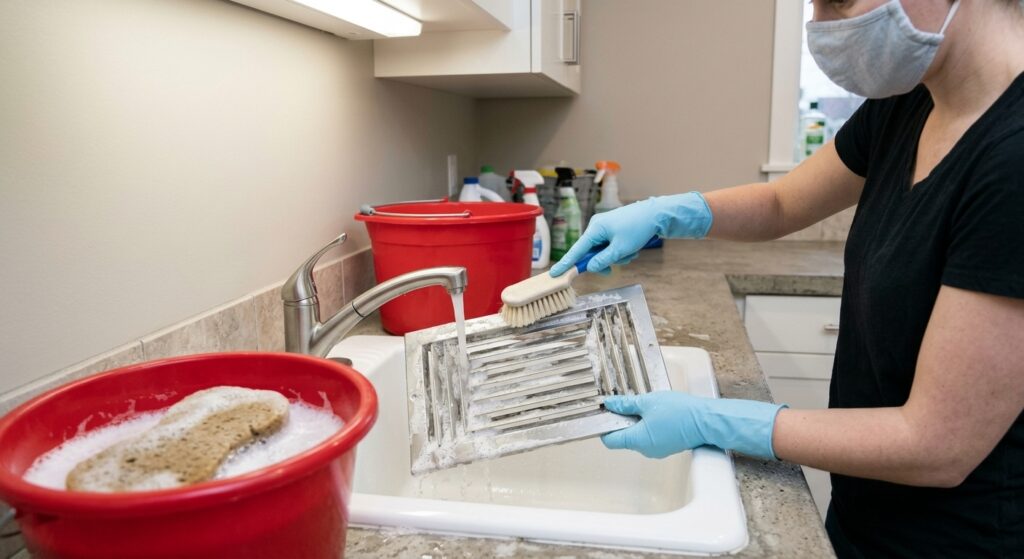
First, turn off the heating and cooling system so it doesn’t blow spores around while you work. Put on gloves, eye protection and a mask, and open a window if the weather lets you. Then unscrew the vent cover and take it outside or to a utility sink.
Scrub it with warm water and household detergent, using a soft brush to get between the slats. Rinse it and let it dry completely before you put it back, because a damp cover invites the mold to return. Never mix cleaning products, especially bleach and ammonia, which together create toxic fumes. While the cover is off, wipe the visible edge of the duct opening with a damp, soapy cloth and dry it well.
Signs the Problem Goes Deeper Than the Vent
Cleaning the cover treats the symptom, not the source. These signs suggest mold on air vents is coming from inside your system:
- The mold returns within a few weeks of cleaning.
- Several vents throughout the house show growth at the same time.
- A musty smell gets stronger when the system runs.
- You can see mold or moisture inside the duct opening, beyond the reach of a cloth.
- There’s water around your indoor unit or a history of drain line clogs.
Any one of them points to moisture or mold deeper in the ductwork or air handler, where DIY cleaning can’t reach.
Why Duct Mold Needs a Professional
Mold inside the ductwork is a different job from cleaning a vent cover. Ducts are hard to reach, and some are lined with insulation on the inside. According to the EPA, wet or moldy duct insulation should be removed and replaced because it can’t be cleaned effectively, and no antimicrobial products are approved by the EPA for use on lined ductwork.
A professional can inspect the ducts, find where the moisture is coming from and recommend the right fix, whether that’s air duct cleaning, sealing and insulating the ducts, clearing a clogged drain or adding humidity control. Cleaning the mold without fixing the moisture only buys time, so a full inspection is the best way to stop mold on air vents from coming back.
How to Keep Mold on Air Vents From Coming Back
The EPA keeps it simple: controlling indoor moisture is how you control indoor mold. Every long-term fix for mold on air vents comes down to keeping moisture out of your vents, your ducts and your air.
Keep Indoor Humidity in the Safe Range
You can see what’s going on inside your home with a simple humidity monitor, often available for less than $50 at hardware stores. Aim for indoor humidity between 30% and 50%, and treat 60% as the ceiling. Readings that stay high through a wet winter are a sign your home needs more help controlling moisture.
Run the bathroom and kitchen exhaust fans every time you shower or cook, and make sure the dryer vents outdoors. For homes that stay damp no matter what, a whole-home dehumidifier works with your HVAC system to pull moisture out of the air all year. The Air Conditioning Specialist offers dehumidifier installation sized to your home, and our article on the best indoor air quality monitor can help you pick a monitor that tracks humidity.
Keep Your HVAC System Clean, Drained and Sealed
Your heating and cooling system has a big say in keeping mold on air vents away. Change the air filter regularly so dust doesn’t pile up on the coils and in the ducts. Keep the condensate drain line clear, and check that the drain pan slopes toward the drain so water doesn’t sit under the indoor unit.
Ducts in attics and crawl spaces should be properly sealed and insulated. Sealing keeps damp, unconditioned air from getting pulled into the system, and insulation keeps the duct surfaces from getting cold enough to collect condensation. A professional can inspect and handle both in a single visit.
Schedule Regular Maintenance and Inspections
The EPA warns that delayed or insufficient maintenance can lead to moisture problems in buildings, which is why regular HVAC maintenance is part of preventing mold. At a maintenance visit, a technician can check the drain line and pan, look at the coils for moisture and growth, find duct leaks and confirm the system is removing moisture the way it should.
Already spotted mold on air vents at home? Don’t wait for it to spread. The Air Conditioning Specialist helps homeowners in Milledgeville, Covington, Augusta and the surrounding communities track down the moisture source, clean the affected areas and put the right humidity control in place. Ongoing AC maintenance or our Comfort Club maintenance plan keeps your system checked every season, so mold doesn’t get a second chance.
Frequently Asked Questions
What causes mold on air vents?
Usually moisture, whether from condensation, high indoor humidity or HVAC drainage and airflow problems. Dust on the vent covers and inside the ducts gives mold something to feed on, and repeated dampness lets it grow.
Why is mold on air vents worse in winter?
Wet winters raise indoor humidity, temperature swings create condensation on ducts and vents, and the air conditioner isn’t running to pull moisture out of the air. This year forecasters expect a strong El Niño to bring Georgia a wetter than normal winter, which adds to the risk.
Is mold on air vents dangerous?
It sits right where your HVAC system blows air into your rooms, so it can spread spores through the house. The EPA lists mold as a common asthma trigger, and it can be especially bothersome for people with allergies or breathing problems.
Can I clean mold on air vents myself?
A small amount on a vent cover, usually yes. Turn off the system, wear gloves, eye protection and a mask, scrub the cover with detergent and water and let it dry completely before putting it back. If the mold comes back quickly or shows up on several vents, call a professional.
What humidity level prevents mold?
The EPA recommends keeping indoor relative humidity below 60%, and ideally between 30% and 50%. A humidity monitor helps you keep track, and a whole-home dehumidifier can help hold it in range.
Who can help with mold on air vents near me?
The Air Conditioning Specialist serves homeowners in Milledgeville, Covington, Augusta and the surrounding Georgia communities. Our team can find the moisture source, clean affected ductwork and install humidity control, so mold on air vents doesn’t keep coming back.