Anyone who has typed “furnace tune up near me” into a search bar is usually wondering the same thing: why pay for a visit when the furnace seems to be working fine? When the heat still comes on, skipping it is tempting. The trouble is that a furnace that turns on isn’t necessarily running safely, efficiently or reliably, and the gap tends to show up on the coldest night of the year or on the next energy bill.
For most Georgia homes, the honest answer is yes. A yearly furnace tune up pays for itself in comfort, safety and repairs you never have to make. In this article we’ll walk through what happens during a visit, what you gain every winter, what skipping it really costs and how to pick the right local technician. The Air Conditioning Specialist provides furnace tune ups for homeowners in Milledgeville, Covington, Augusta and the surrounding communities, with 24/7 emergency heating service for when the unexpected happens.
What Happens During a Furnace Tune Up
Think of a furnace tune up as a hands-on inspection, cleaning and adjustment of every part involved in making heat safely. Book a furnace tune up near me and a trained technician goes through the burner, ignition, safety and airflow systems one at a time, fixing small issues before winter puts the furnace under full load.
Safety Checks That Protect Your Family
Safety comes first on the list. Inside the furnace sits the heat exchanger, a metal chamber that keeps the flame and its exhaust gases away from the air you breathe, and years of heating up and cooling down can crack it. Once it cracks, combustion gases, carbon monoxide included, can mix with your indoor air, so the technician inspects it closely.
From there the venting and flue get checked to confirm exhaust is leaving the house properly. Safety controls like the high-limit switch and rollout switch are tested, so the furnace shuts itself down if something goes wrong. Gas connections and gas pressure get a look too, because a leak is a fire hazard and the wrong pressure makes the burners run poorly.
Burner, Ignition and Flame Sensor Service
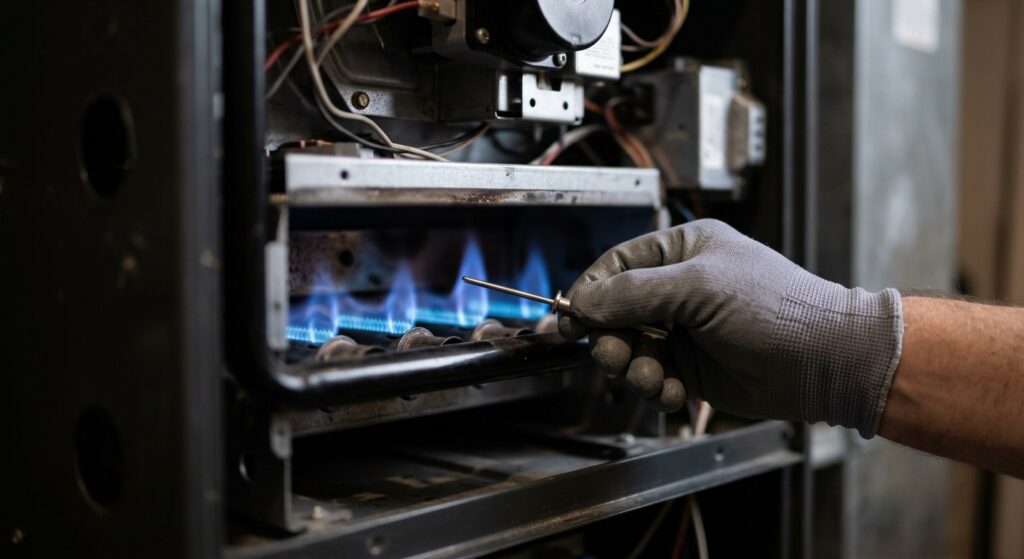
Then comes the part that actually makes the heat. The burners are inspected and cleaned, the flame is checked to make sure it burns steady and blue, and the igniter that lights it all gets tested. Whether your furnace uses a hot surface igniter or an electronic spark, both wear out with time.
Last in this group is the flame sensor, a small rod that confirms the burners really lit. When residue builds up on it, the furnace may start, run a few seconds and shut off again. That’s one of the most common no-heat calls in winter, and one of the easiest to prevent with a furnace tune up, since the sensor just needs cleaning.
Airflow, Blower and Thermostat Testing
No furnace can heat a home without moving air. So the technician checks the air filter, inspects and cleans the blower wheel, tests the blower motor and tightens the electrical connections. A dirty blower wheel cuts airflow and makes the whole system work harder, and loose wires create heat that can damage parts.
The thermostat is tested at the end, to confirm it calls for heat correctly and the furnace responds the way it should. Once the visit wraps up, every major part of your heating system has been checked, cleaned or adjusted. You can see the full scope of a professional furnace maintenance visit from The Air Conditioning Specialist.
What You Gain From a Furnace Tune Up Every Winter
You get three things out of a furnace tune up: heat you can count on, a safe home and heating bills that stay under control. In a winter like this one, each of them matters more.
Reliable Heat When the Cold Snaps Hit
Steady cold is rare in a Georgia winter. Mild days give way to sudden freezes instead, and forecasters expect this winter’s strong El Niño pattern to bring sharper swings and a higher risk of ice storms across the state. The same furnace that idles through a 60-degree afternoon may have to run nonstop through a 20-degree night the next day.
Sudden demand like that is exactly when worn igniters, dirty flame sensors and tired blower motors give out. With a furnace tune up, those weak parts turn up while the weather is still mild, and your heat is ready when the temperature drops overnight.
Peace of Mind About Safety
A properly maintained gas furnace is a safe one, and a yearly inspection is the best way to keep it that way. When a technician checks the heat exchanger, venting, gas connections and safety controls, they can catch problems you’d never spot on your own.
Add working carbon monoxide detectors on every level of the house and you’ve covered the two most important steps for heating safety. For a lot of families, that peace of mind alone justifies the cost of the visit.

Lower Heating Costs All Season
Clean burners, a clean blower and good airflow let a furnace turn more of its fuel into usable heat. A dirty or poorly adjusted furnace runs longer to reach the same temperature, and you pay for that extra runtime on your bill. Here’s why it adds up:
- Heating is your home’s biggest energy job. According to the U.S. Energy Information Administration, space heating accounted for 42% of energy consumption in American homes, more than any other use.
- Heating bills add up every year. The same EIA data shows households heating with natural gas spent an average of $519 on space heating, so even a small efficiency loss costs real money.
- Well-maintained equipment lasts longer. ENERGY STAR recommends a heating check-up every fall and warns that a dirty burner or cracked heat exchanger makes equipment operate less safely and efficiently.
Put those together and a yearly furnace tune up ends up being one of the most cost-effective things you can do for your home.
What Skipping a Furnace Tune Up Really Costs
Skipping one year can seem harmless, especially when the furnace started just fine last winter. Neglect doesn’t send the bill all at once, though. The cost builds quietly and then shows up as an emergency, a bigger repair or a furnace that wears out early.
Emergency Calls on the Coldest Nights
Furnaces usually fail when they’re working hardest, which means the first hard freeze or the middle of an ice storm. At that moment every heating company in the area is busy, and you may be sitting in a cold house waiting for service.
A furnace tune up moves that risk to a calm fall afternoon instead. Say the technician finds a weak igniter or a failing capacitor. It can usually be replaced right there, on your schedule, rather than turning into a no-heat emergency in January.
Small Problems That Grow Into Big Repairs
Most big furnace repairs start out small. A clogged filter cuts airflow, and the heat exchanger runs hotter than it should. A dirty flame sensor causes repeated short cycles that wear out the igniter and the control board. A loose electrical connection gets a bit hotter every day until a part burns out.
Every one of those is cheap to fix early. Ignore them and they can damage the priciest parts of the furnace, like the blower motor, the control board and the heat exchanger. Catching them during a furnace tune up is what separates a quick adjustment from a major repair bill.
A Shorter Life for Your Furnace
Few things in your home cost as much to replace as the furnace, so every extra year you get out of it is money saved. A furnace that runs clean and properly adjusted simply puts less wear on its moving parts and less heat stress on the heat exchanger.
Compare it to routine service on your car. Skip it and the engine won’t stop tomorrow, but everything under the hood wears out sooner. Regular care lets you plan a replacement on your own timeline and budget, instead of having a sudden failure in the middle of winter make the decision for you.
How to Choose a Furnace Tune Up Near Me
At first glance, the results for a furnace tune up near me can all look alike. A little homework helps you find a company that does the job thoroughly instead of one that takes a quick look and leaves.
Look for Licensing and Local Experience
Begin with the basics. A reputable heating company is properly licensed and insured, and its technicians are trained to work on gas furnaces safely. Gas and electrical work carry real risks, so this is no place to cut corners.
Local experience counts as well. A company working in your area every day knows Georgia’s climate, the furnace brands common in local homes and how our wet, unpredictable winters affect heating equipment. A nearby team found through a furnace tune up near me search can also get to you faster if something goes wrong later on.
Ask What the Visit Includes
Tune ups aren’t all the same. Some low-price offers cover little more than a filter check, so before you book, ask what the technician will inspect, clean and test. A complete furnace tune up should include the heat exchanger, burners, igniter, flame sensor, gas pressure, venting, blower, electrical connections, safety controls and thermostat.
It’s also fair to ask how they handle repairs found during the visit. A good technician tells you what they found, shows you why it matters and gives you clear options before doing any extra work. You should never feel pushed into a repair you don’t understand.
Choose a Company That’s There When You Need It
The tune up happens once a year, but heating problems can show up any day. When the same company also handles repairs and emergencies, the team that already knows your furnace is the one that helps if it fails in the middle of the night.
At The Air Conditioning Specialist we offer 24/7 emergency heating service, along with furnace repair and maintenance across Milledgeville, Covington, Augusta and the surrounding communities. So if you’re looking for a furnace tune up near me, you get one local team for the whole life of your system.
When to Book Your Furnace Tune Up
Good timing makes a furnace tune up more effective and easier to schedule. The idea is simple: have the furnace checked before it has to work hard, not after it has already failed.
The Best Time Is Before the First Freeze
Fall is the ideal season. The weather is still mild, technicians have more open appointments, and any repairs can be done before you depend on the heat. ENERGY STAR also recommends fall for heating check-ups, since contractors get busy once winter arrives.
Already past the first cold snap? It’s still worth booking now. A mid-season visit can catch problems before the coldest stretch of winter, which in Georgia often lands in January and February.
Signs Your Furnace Needs Attention Now
Some symptoms shouldn’t wait for a routine visit. Call for service if the furnace short cycles on and off every few minutes, makes banging, grinding or squealing noises, blows cool air or gives off a burning smell that lingers, and also if your heating bill jumps for no obvious reason.
If you ever smell gas, get out of the house right away and call your gas company from outside. For everything else, turning the system off and calling a technician keeps a small problem from getting worse.
Make It Automatic With a Maintenance Plan
The easiest way to never miss a furnace tune up is to put it on a schedule. With The Air Conditioning Specialist’s Comfort Club maintenance plan, your heating and cooling tune ups stay on a regular calendar, and your furnace gets checked before every winter without you having to remember to call.
Rather book a one-time visit? You can schedule a single furnace maintenance appointment anytime. Either way, if you’ve been searching for a furnace tune up near me in Milledgeville, Covington, Augusta or the surrounding area, our team is ready to help you head into winter with confidence.
Frequently Asked Questions
Is a furnace tune up worth it?
For most homes it is. A yearly furnace tune up helps prevent breakdowns on cold nights, catches safety issues like a cracked heat exchanger and keeps the furnace running efficiently. Space heating is the largest energy use in American homes, so efficiency losses add up fast.
What does a furnace tune up include?
A complete visit covers the heat exchanger, burners, igniter, flame sensor, gas pressure, venting, blower, electrical connections, safety controls and thermostat. Each part is inspected, cleaned and adjusted, and the technician explains any repairs it needs.
How often should I get a furnace tune up?
Once a year is standard, ideally in the fall before the first freeze. Older furnaces and homes with pets or heavy dust may need closer attention.
How do I find a good furnace tune up near me?
Look for a licensed, insured local company with experience on gas furnaces, and ask exactly what the visit includes. It also helps to choose one that offers repair and emergency service, so the same team can step in if something fails later.
What if my furnace stops working before my tune up?
Make sure the thermostat is set to Heat, replace a dirty filter and check that the breaker and the furnace switch are on. If the heat still won’t come on, or you notice a gas smell or burning odor, call a professional. The Air Conditioning Specialist offers 24/7 emergency heating service.
Where does The Air Conditioning Specialist provide furnace tune ups?
Our team serves homeowners in Milledgeville, Covington, Augusta and the surrounding Georgia communities. If you’ve been searching for a furnace tune up near me in any of these areas, we can help.